
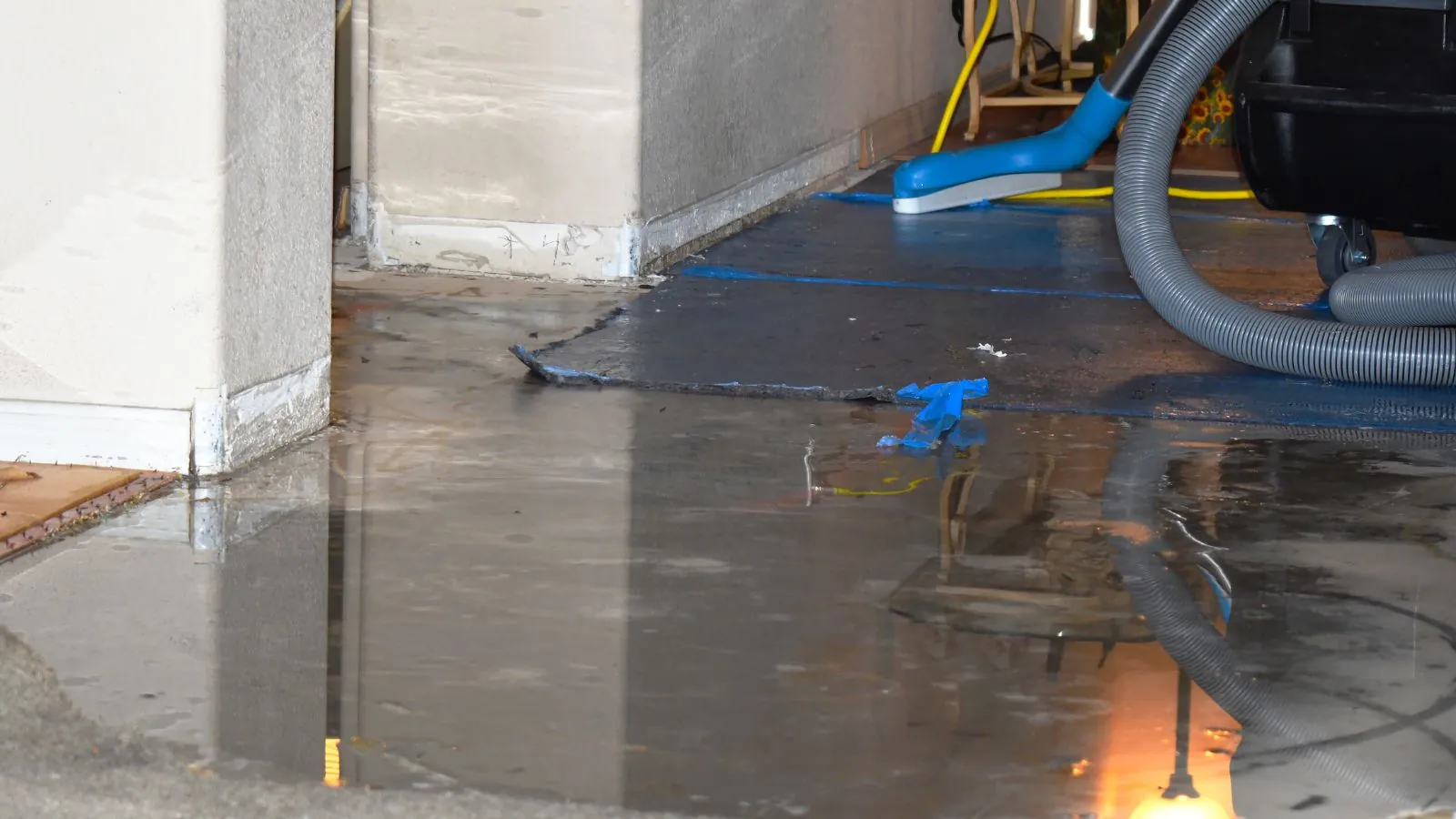
That squelch underfoot means water extraction should start now
Water extraction is the physical removal of standing water from floors, subfloors and low spaces before it soaks any deeper. In Uniondale, NY, emergency water removal usually means a pump or extraction unit working on a flooded basement, a ruined living room or a ground floor covered in an inch or more of water. The 24/7 line is open now, and every hour the water sits, it climbs into drywall, trim and flooring.
While you wait for the crew, stop the source if you can reach the shutoff safely. Lift valuables, shoes and papers off the floor. Keep children and pets out of the water, and do not walk through it if outlets, cords or appliances are submerged.
When standing water is an emergency
Call right away if water is deeper than the baseboards, if it is spreading toward other rooms, or if it came from a toilet, a drain or the street. Water that has touched a sewer line or outdoor flooding is not clean, and it should not stay in the building. Same-day response when available is the standard for these calls, and the dispatch line works nights, weekends and holidays.
If the water is touching outlets, a panel, a furnace or a water heater, stay out. Call the utility or 911 before you call us, because a crew cannot enter until the power or gas risk is handled. Shut off the breaker for that area only if the panel is dry and easy to reach.
- Water is rising or still flowing from a broken line
- Water is gray or dark, smells like sewage or came in from outside
- Carpet is soaked and the floor feels spongy underfoot
- Water is dripping through a light fixture or ceiling below
- You cannot reach the main shutoff without stepping in the water
How the water actually comes out
The tool depends on depth and layout. Deep water in a basement or a sunken room goes first to a submersible pump, which moves a lot of water quickly through a hose to a drain or outside. Once the level drops to a film, wet vacuums and extraction wands take over for the last inch.
Truck-mounted extraction units pull from a long hose line and handle large volumes, which suits big floor plans and apartment buildings. Portable extraction units are carried inside and work room by room, including on carpet and pad where a pump cannot reach.
- Confirm the source is stopped and the electrical risk is handled.
- Take moisture readings and photograph the water line before anything moves.
- Pump out deep water with a submersible pump.
- Extract the remaining water from hard floors, carpet and pad with wet vacuums and extraction units.
- Remove soaked pad, loose debris and anything that cannot be saved.
- Hand the structure to the drying crew with a written scope.
Why flat ground makes pumping matter
Uniondale sits at about 52 feet above sea level on flat Long Island terrain. Water that pools on flat ground has nowhere quick to go, so a flooded lower level will not drain by itself the way it might on a slope. That is why a pump goes in early rather than waiting for the water to settle.
Large buildings add their own problem. Offices, dorm-style housing and institutional buildings in the Coliseum, Hofstra and Nassau Community College area can have long runs of floor under a single leak, and each hour of standing water raises downtime and the number of rooms affected.
What you will see, hear and smell
Not every wet floor is obvious. Some water sits under vinyl or carpet where it looks like a damp patch, while the real volume is in the pad and subfloor below.
- Squishy carpet or a floor that gives under your foot
- A sump pump running nonstop or a basement with a visible water line
- Baseboards that are swelling, darkening or pulling away from the wall
- A musty smell that appears within a day of a leak
- Water marks climbing the lower part of drywall
- The hum of a running pump or a drain that gurgles and backs up
What happens right after the last of the water is out
Extraction removes the surface water, but the structure is still wet. Studs, subfloor and the back of drywall hold moisture long after the floor looks dry. The crew checks readings with moisture meters and a thermal imaging camera, then sets up air movers and dehumidifiers so the building starts to dry. The full sequence for that stage is covered under structural drying and dehumidification.
If the water came from outdoor flooding or contained sewage, the job shifts toward removal and sanitizing before drying begins, as described under flood damage cleanup. For a flooded lower level, see how a basement cleanup is handled step by step.
Water is spreading right now? The dispatch line is open around the clock.
☎ (516) 845-9582Extract and dry in place, or tear out first
The right choice depends on how long the water sat and what it contained. Clean water from a supply line that is pumped within a day can often be dried in place. Gray or black water, or any water that sat for several days, changes the plan because porous materials absorb contamination.
| Situation | Usual approach | Why |
|---|---|---|
| Clean supply line water, caught early | Extract, then dry carpet and structure in place | Materials stay clean and can be saved |
| Water over a day old or deep in the pad | Extract, then remove the pad and dry the subfloor | Pad holds water and dries slowly |
| Gray water from an appliance or drain | Extract, remove porous materials, sanitize | Contamination soaks into soft materials |
| Sewage or flood water | Extract, remove affected materials, treat surfaces | Category 3 water is not safe to dry in place |
| Hardwood or glued floors | Extract quickly, then assess for drying mats | Boards cup if water sits underneath |
A crew can give you a straight read on this after taking readings. A pump is only the first stage, and the real decision is what stays and what goes.
What affects the cost of water extraction
Extraction is priced by the work, and the scope and price are explained before work starts. These factors move the total most: Extraction is the first stage in ANSI/IICRC S500, so a company that jumps straight to drying is skipping a step.
- Water category: clean, gray or black water (category 1, 2 or 3) changes the safety steps and disposal
- Depth and affected area: more floor and more depth means more pumping time
- Materials involved: carpet, pad, hardwood and drywall are handled differently
- Equipment and days: pumps, extraction units and any drying that follows
- Rebuild scope: tear-out of damaged materials versus saving them
If you carry coverage, ask your insurer how your policy treats the source of the water. To get a real number for your property, call the 24/7 line and describe what you see.
Insurance and documentation during extraction
Take photos and video before any cleanup begins. Take photos or video of the water, the damaged items and the water line on the walls, then keep a list of damaged belongings with receipts or proof of value. The crew also records moisture readings and photos that you can give your adjuster.
Check your policy for how it treats the source. A typical homeowners policy does not cover flood, and backup of drains or sewers may need a water back-up endorsement. File a claim as soon as possible, and save receipts for emergency steps you take to protect the property.
Who we dispatch and what we do not do
We dispatch licensed and insured restoration professionals to homes and businesses in the 11553, 11555 and 11556 ZIP codes, including the Hempstead Turnpike corridor. Neighbors in Hempstead, Garden City, Westbury and East Meadow often call the same line after a storm or a plumbing failure.
One limit matters. We remove the water and dry the building, but we do not repair the failed pipe or fixture itself, because a licensed plumber does that. If a sewer backup caused the loss, the process continues under sewage backup cleanup. You can also check the areas we serve to confirm your address.
Frequently Asked Questions
Do you handle water extraction emergencies at night or on weekends in Uniondale?
Yes. The dispatch line runs 24/7, including overnight, weekends and holidays, and calls are routed to the next available crew in your area. Same-day response when available is the standard, though we do not promise an exact arrival time. While you wait, stop the source if it is safe and keep everyone out of the water.
What equipment is used to remove standing water?
Deep water is pumped out with submersible pumps. The remaining water comes up with wet vacuums, portable extraction units and, for larger jobs, truck-mounted extraction units. Soaked pad and loose debris are removed so the structure can start drying. The crew chooses the tool from the depth and layout.
My basement floor is covered in water after rain. What should I do first?
Do not step in the water if the panel, outlets or a furnace are near it. Call the utility or 911 if there is an electrical or gas concern, then call the 24/7 line. Lift what you can off the floor and take photos before anything is moved.
Is water extraction enough to fix the damage?
No. Extraction takes out the standing water, but walls, subfloors and framing stay wet. Moisture readings decide the drying plan, and a crew sets air movers and dehumidifiers to finish the job. Skipping that step is how swelling and musty smells show up a week later.
Does flat ground in Uniondale make flooding harder to clear?
It can. Uniondale is flat Long Island terrain at about 52 feet above sea level, so water on the ground or in a low floor does not run off quickly. Pumping is often the only way to get it out of a basement or ground floor, so call early rather than waiting for it to recede.
Can I just use a shop vac and fans myself?
For a small spill, a wet vacuum helps. For anything deeper than a film, a household vacuum cannot keep pace, and fans alone leave water in the pad, subfloor and wall cavities. If the water was gray or black, leave it to a crew with the right protection.