
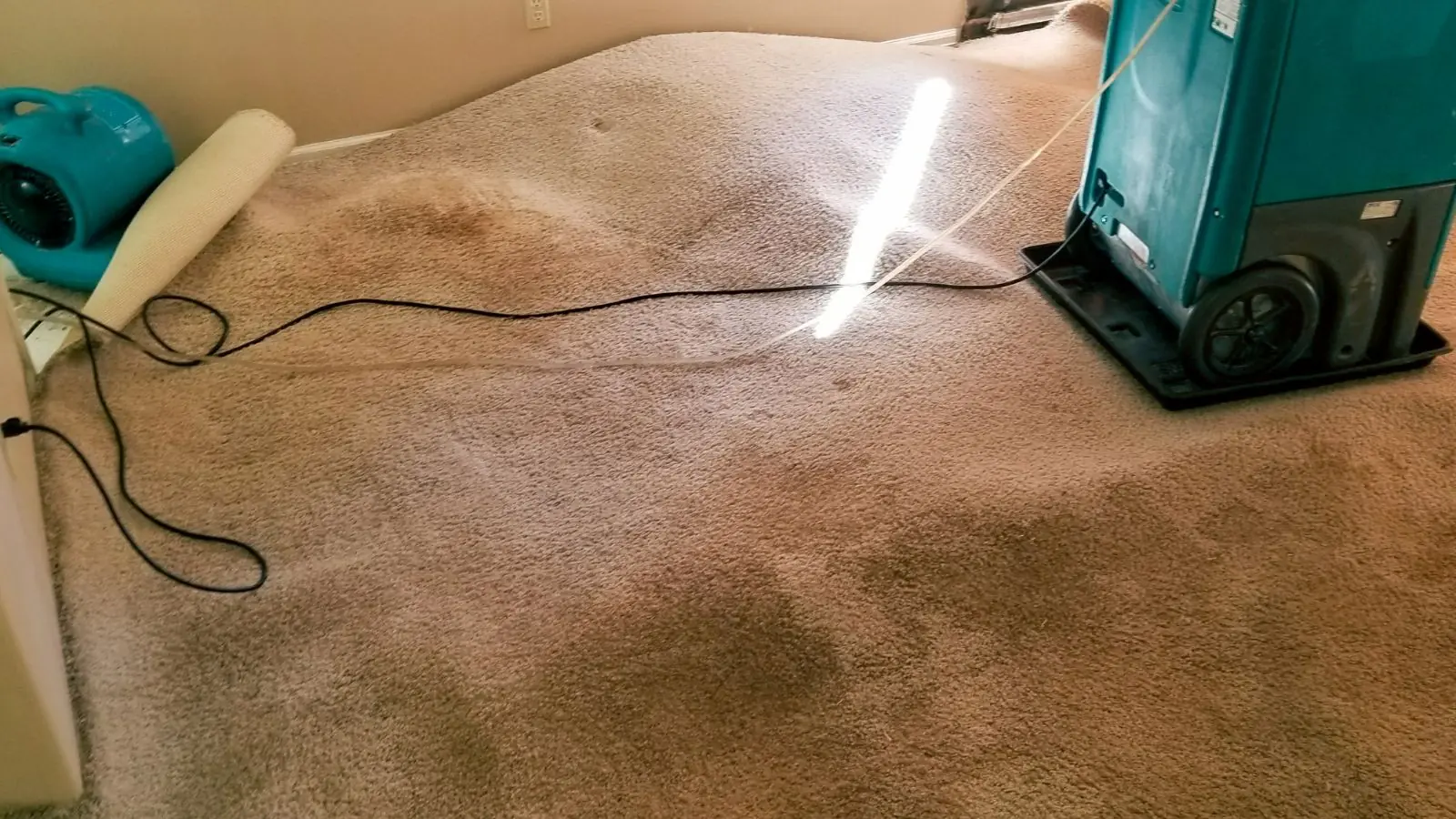
Why a dry-looking house can still be wet
Water drying services in Uniondale, NY are about the moisture you cannot see. After a leak, drywall, framing and subfloor can hold water long after the surface feels fine, and that is where mold and rot begin.
Structural drying removes that water in a controlled way, using instruments to find it, equipment to pull it out and readings to prove it is gone.
The wall feels cool and damp days after the leak stopped
A wall that stays cool to the touch, baseboards that keep swelling, paint that bubbles or a musty smell that returns after you wipe things down all say the same thing. Moisture is still inside the material.
The trade term is incomplete drying, and the fix is measurement followed by controlled airflow and dehumidification, not a fan pointed at the wall.
What water mitigation means before the drying starts
Water mitigation is the work done in the first hours to stop damage from growing. It is separate from the repair that follows, and it decides how much of the house can be saved.
The first job is to stop the source. A shut-off valve, a plumber's temporary repair or a tarp over a failed opening all count. Then the crew removes standing water with wet vacuums, portable extraction units or truck-mounted gear, because every gallon pulled out as liquid is a gallon that never has to be dried out of wood.
Next comes protection. Furniture is lifted onto blocks or moved out, wet carpet pad and soaked insulation are removed, and wet baseboards may be pulled so walls can breathe. The crew photographs conditions and starts a moisture log so the story of the loss is on paper from the first visit.
Mitigation also includes decisions. Some materials are cleaned and dried, and others are cut out, depending on water category and how long the water sat. Good mitigation is fast and documented. It leaves the structure ready for drying equipment, and it limits what the rebuild will cost later. Keep the receipts and records, because they support any claim.
Finding the water: meters, thermal imaging and mapping
Moisture mapping water damage starts with instruments. A pin or pinless moisture meter gives a number for wood, drywall and concrete. A thermal imaging camera shows cool patches where evaporation or hidden water is pulling heat, which points the meter to the right spots.
The crew marks the wet boundary on the wall or floor, records readings at set points and returns to the same points on every visit. That map is how you know the drying is working, and it is the basis for the records an adjuster may ask to see.
Psychrometrics in plain words
Drying follows three simple variables: temperature, humidity and airflow. Warm air holds more water vapor, dry air takes moisture from wet materials, and moving air speeds the transfer.
The goal is a drying goal, a reading close to what the same material measures in an unaffected part of the building. Crews adjust equipment until the air is dry enough to keep pulling moisture out, and until the materials match that benchmark.
The equipment and what each piece does
Air movers
Low, wide fans that push air across wet surfaces so water leaves the material as vapor.
LGR dehumidifiers
Refrigerant units built to work at high humidity. They pull vapor out of the air so the air can keep drying the structure.
Desiccant dehumidifiers
Used in cold spaces or for very dry targets, since they work well where refrigerant units slow down.
Drying mats and injection drying
Mats pull water from hardwood floors, and injectidry systems push dry air into wall cavities without opening the whole wall.
Drywall water damage: dry it, cut it or replace it
Drywall water damage depends on how long the board stayed wet and what kind of water reached it. A recent clean leak can be dried in place with air movers and cavity drying. Board that is soft, swollen, stained through or exposed to category 3 water is cut out.
Insulation behind wet drywall is usually replaced, not dried, because it holds water against the back of the board. Wall and drywall water damage repair explains the repair side, including patching and finishing.
Want to talk it through with someone? The dispatch line is open around the clock.
☎ (516) 845-9582Humidity outside the house works against you
Long Island summers are humid, so opening windows to dry a wet room often brings in air that is wetter than the air inside. In winter the house is closed up and heated, which helps drying but can hide a damp wall.
That is why Uniondale crews keep the building closed during drying and let dehumidifiers control the air, instead of relying on weather.
How long it takes depends on the job
There is no honest fixed number of days. Drying time depends on how much water got in, which materials hold it, the water category, the starting humidity and how many pieces of equipment the space can support.
The crew visits daily or on a set schedule, checks readings and moves or removes equipment as areas come in. Drying ends when the numbers say so, not when a calendar does.
Which equipment fits which problem
| Situation | Equipment used | What readings guide |
|---|---|---|
| Wet carpet and pad | Extraction, air movers, dehumidifier | Subfloor moisture and air humidity |
| Wet wall cavity | Injectidry or cavity drying, dehumidifier | Stud and drywall readings at marked points |
| Hardwood floor | Drying mats, LGR dehumidifier | Board and subfloor readings daily |
| Cold or sealed space | Desiccant dehumidifier, heat | Air humidity and material readings |
| Wet concrete slab | Dehumidifiers, air movers | Slab readings, which move slowly |
What drying costs and why
Drying is billed on scope, so what you pay follows what the building needs. These five factors set it. ANSI/IICRC S500 is the document that frames drying by temperature and humidity, so it is the right thing to ask a contractor about before equipment is set.
- Water category (1, 2 or 3) and what it did to materials
- Affected area, including hidden wet cavities beyond the visible stain
- Materials involved, since dense materials hold water longer than carpet
- Drying days and equipment count, which depend on room size and conditions
- Rebuild scope once the structure is dry
Equipment is measured against the loss, not stacked on by habit. To get a real number for your property, call the 24/7 line and describe what you see.
Documentation, insurance and the limits of drying
Moisture readings and photographs give your adjuster a record. The New York State Department of Financial Services suggests documenting losses before cleaning anything up and keeping receipts for emergency work. Check your policy and ask your insurer what it covers, and note that permanent repairs should wait for the insurer's inspection.
Drying does not repair the cause. A plumber fixes pipes, a roofer fixes roofs, and an HVAC technician fixes equipment. We dry the building after that source is stopped.
Where it connects and where we work
Drying follows the removal of liquid water, covered in water extraction. Floors are handled differently, so see carpet water damage restoration for pad and carpet decisions. If a damp area is slow to dry and begins to show growth, read mold remediation for the New York process.
We dispatch to homes and businesses in the 11553, 11555 and 11556 ZIP codes, and the service area page lists nearby communities.
Frequently Asked Questions
Are the dehumidifiers and air movers loud, and will my electric bill go up?
Expect steady fan and compressor noise, and equipment usually runs around the clock. Electric use goes up while it runs. The crew plans circuits so no breaker trips, and you can ask about running load before work starts. Raise sleeping and work concerns early so equipment can be placed sensibly.
The wall still feels cool and damp days after the leak stopped. Is that normal?
It can be, because wall cavities dry slowly. But a wall that stays cool, swells or smells musty may hold hidden moisture. A meter and thermal imaging camera show whether drying has stalled, and cavity drying can be added without removing the whole wall.
Can I use my own fans and a store-bought dehumidifier?
They help a little with a small, shallow spill. They cannot match the capacity of LGR units, and they cannot tell you when the structure is dry. For anything inside walls or floors, measured drying is the safer path.
How will I know the structure is dry?
The crew compares readings to a drying goal, taken from unaffected areas of the building, and records them at the same marked points each visit. When the numbers match, the equipment comes out. You can give those records to your insurer.
Do Uniondale summers slow drying?
They can. Humid outdoor air means open windows rarely help. Dehumidifiers do the work, so the building stays closed. In humid weather the equipment count may be higher than the same room needs in a dry month.
Do I need to remove baseboards and drywall to dry a wall?
Not always. Small holes behind baseboards allow dry air into the cavity, and injection systems can dry wall bays. Board that has swollen, sagged or stayed wet from category 3 water is removed. The readings decide, and the crew explains the choice before cutting.