
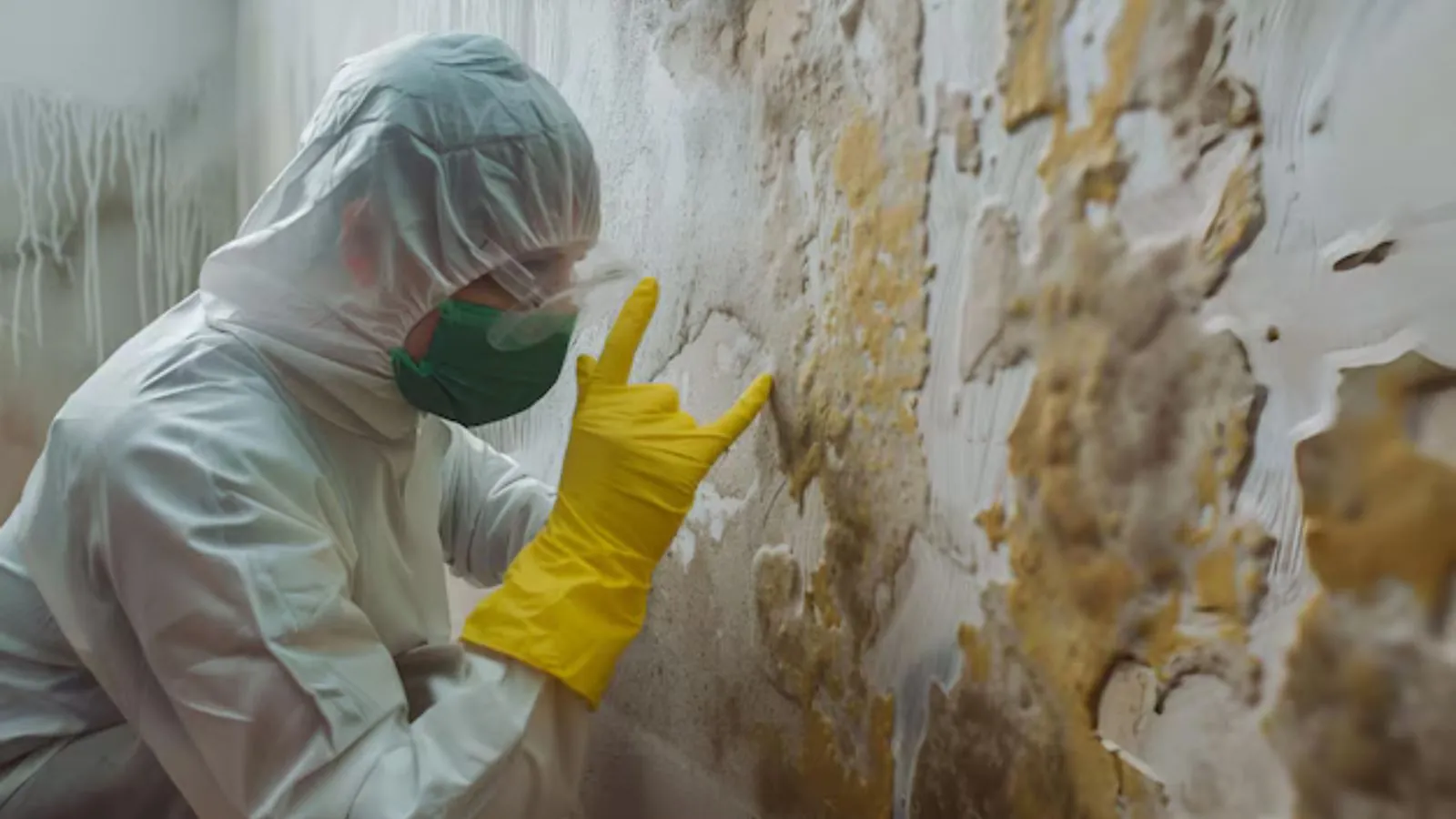
What mold remediation means after a water loss
Mold remediation in Uniondale, NY is the controlled removal of mold growth from a building, after the moisture that fed it has been stopped and dried. It follows published industry practice such as ANSI/IICRC S520, which describes containment, removal of affected materials and cleaning.
There are no federal mold standards, so New York State sets the rules through a licensing law. That law decides who can assess, who can remediate, and in what order.
There is a musty smell and a spreading dark patch on the wall
That combination usually means moisture has been sitting behind or under a surface for some time, whether from a slow leak, humid air or a past water event. The trade term for what comes next is mold remediation, but the first move is to find and stop the water. A licensed assessor then writes the plan that tells a remediator what to do.
The New York sequence, step by step
Since January 1, 2016, a mold project in New York means assessment, remediation or abatement of more than 10 square feet of mold, excluding routine cleaning. Anyone you hire for that work must be licensed, and the order matters.
- Stop and dry the water source. We dry and document it with moisture readings and photos, and a plumber or roofer repairs the failed part.
- Hire a licensed mold assessor. This is a separate professional from the remediator, and we do not perform mold assessment or testing.
- The assessor writes a mold remediation plan, and it includes the cost estimate.
- Hire a separate licensed remediator who works from that plan. A licensee may not do both assessment and remediation on the same project.
- The remediator contains the area, removes affected materials and cleans surfaces according to the plan.
- Keep the plan, the moisture readings and the photos for your records.
A remediator should not give you a price before the assessment, and a remediator cannot start without the plan. Beware anyone who skips these steps.
When an owner can handle a small area alone
The New York State Department of Labor household guidance says a homeowner may handle areas of 10 square feet or less on their own property, provided the person has no mold sensitivity. An owner working on their own home does not need a license for that work.
If the patch is bigger, keeps returning, sits in an HVAC system or you are unsure of its size, treat it as a mold project and start with an assessor. Do not sand or scrape a large patch, which spreads dust through the house.
Why mold shows up in Uniondale homes
Long Island has humid summers and winter freezes, and both feed the pattern. A basement, a crawl space or a wall that stays damp through a humid stretch gives growth a place to start. Flat ground makes it worse, because rain that pools near a foundation has nowhere quick to go.
Crawl space mold remediation is a common request when a vapor barrier is torn or standing water sits against the joists. The water side of that problem is covered under crawl space water damage, and the moisture source has to be fixed first.
Signs that point to hidden mold
Mold hides behind drywall, under carpet and inside cabinets. The clues are often visible before the mold itself.
- A musty smell that returns after you clean or air out the room
- Dark, fuzzy or speckled patches on walls, ceilings, baseboards or the back of cabinets
- Paint that bubbles or peels in the same spot every season
- Stains that spread after rain or showers
- Condensation on windows or pipes in a basement or crawl space
- A past leak that was never fully dried
Want to talk it through with someone? The dispatch line is open around the clock.
☎ (516) 845-9582Containment and removal, as the plan describes it
Where an assessor's plan calls for it, the remediation crew sets up containment with poly sheeting and a zipper door, and runs HEPA air scrubbers with negative pressure so dust does not travel. They remove porous materials such as wet drywall, insulation and carpet, bag them in the work area and carry them out.
Framing and other solid surfaces are HEPA-vacuumed and cleaned, and antimicrobial treatment may follow where the plan allows. The area is then dried with air movers and dehumidifiers and checked against the plan. We cannot promise mold will never return, because new moisture can restart it anywhere.
| Material | Usual approach | Why |
|---|---|---|
| Drywall and insulation | Removed and discarded | Porous, and growth penetrates the paper and core |
| Carpet and pad | Removed and discarded | Holds water and cannot be cleaned through the backing |
| Wood framing and joists | HEPA vacuum and clean, sand where the plan says | Solid, and often dried and cleaned in place |
| Hard surfaces such as tile and metal | Cleaned | Non-porous |
| Crawl space joists and subfloor | Cleaned or removed per the plan | Depends on how deep the growth goes |
Black mold is a color, not a different procedure. Black mold removal, like mold removal of any other color, follows the same assessor-first sequence in New York.
How mold remediation cost works in New York
The mold remediation cost is not set by a phone call. In New York the licensed assessor's plan includes the cost estimate, and remediators should not quote before it. The factors that shape that plan are:
- Water category: a clean-water loss that dried quickly differs from a long-standing gray or black water event
- Affected area: patch, room or whole level, and whether it is behind finished surfaces
- Materials: drywall and carpet are removed, framing is cleaned
- Drying days and equipment: the moisture source must be dried and monitored
- Rebuild scope: replacing drywall, flooring and paint comes after clearance
We can scope the water and drying side by phone, but the mold plan comes from the assessor. To get a real number for your property, call the 24/7 line and describe what you see.
Insurance and mold
Whether a policy responds to mold depends on its terms and on what caused the moisture. Check your policy or ask your insurer, and file as soon as you can if you believe the loss is covered.
The New York State Department of Financial Services advises documenting your losses before cleaning up, and moisture readings and photos from our drying work can go into that file. Do not make permanent repairs until the insurer has inspected.
Where we work and what this connects to
Homes and businesses in 11553, 11555 and 11556 are the addresses we list as covered. Mold remediation services start with the wet source, so the crew often works from structural drying and dehumidification and the repair steps on wall and drywall water damage repair.
If the growth sits in a below-grade room, the cleanup side is described under basement water damage cleanup. Any mold removal company or mold remediation company that bills itself as both assessor and remediator on one project is not following the New York rule, so ask each of them for their license.
Frequently Asked Questions
Can the same company assess and remove mold in New York?
No. A licensee may not do both on the same project. A licensed assessor writes the remediation plan, and a separate licensed remediator carries it out. We dry and document the water source and do not advertise mold assessment or testing.
Why does my room smell musty and have a dark patch that keeps spreading?
It usually points to moisture behind the surface. Find and stop the water first, because cleaning the patch alone leaves the cause in place. If the patch is bigger than 10 square feet or you are unsure, start with a licensed assessor.
Can I clean a small patch myself?
The Department of Labor household guidance says an owner may handle 10 square feet or less on their own property if they have no mold sensitivity. Beyond that, treat it as a mold project and hire an assessor and a separate remediator.
Does black mold need a different process?
No. Color does not set the process. The assessor's plan, containment, removal of affected materials and cleaning are the same, and the water source still has to be dry.
I found mold in the crawl space of my Uniondale house. What first?
Stop the moisture, such as a leak or standing water, and keep the area closed off. Call a licensed assessor for a plan, then a separate licensed remediator. Ask the Town of Hempstead Building Department about any permits.