
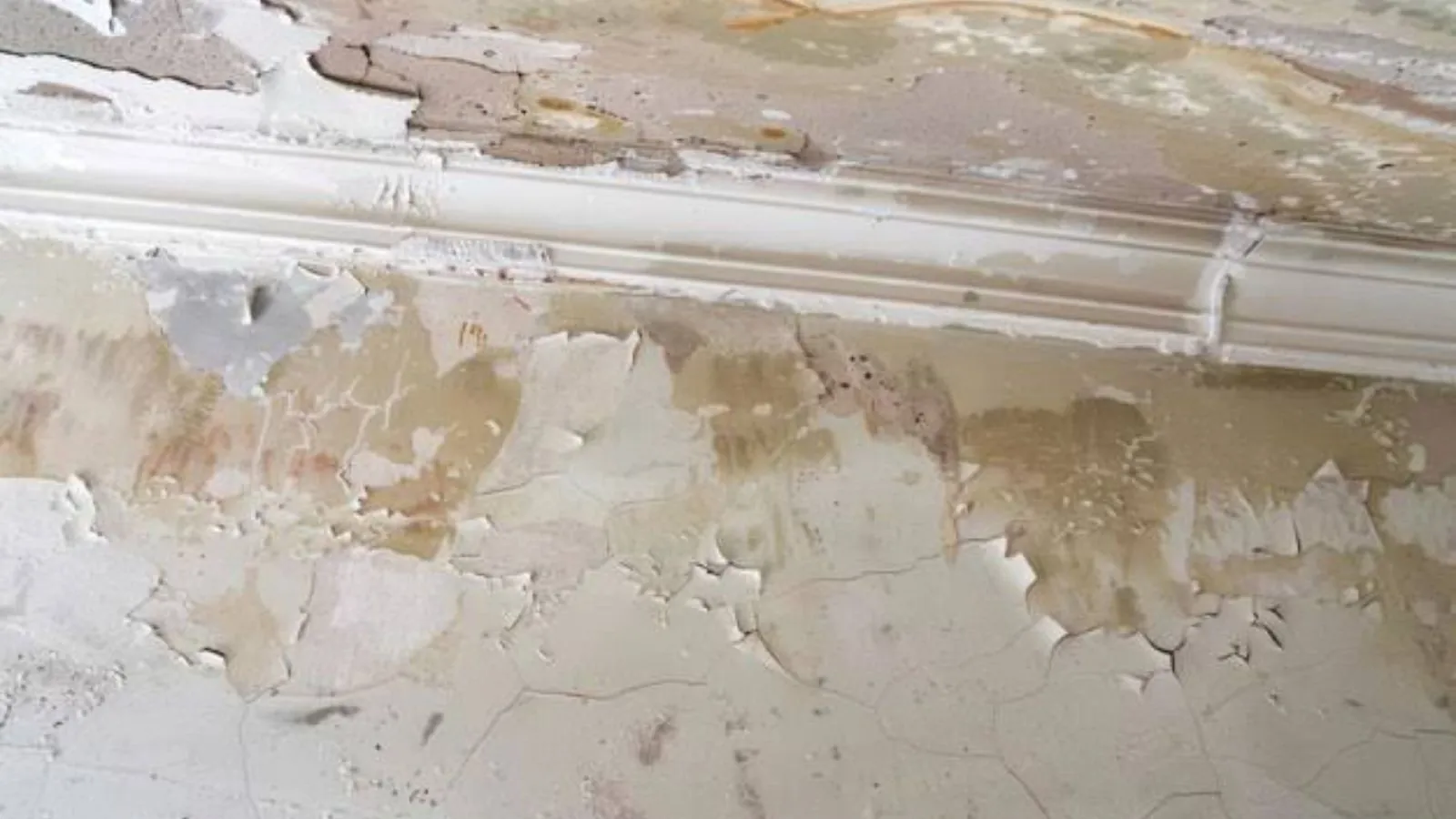
A stain on the wall is only the visible end of it
Wall water damage repair in Uniondale, NY starts behind the paint, because the face of the drywall is the last place water shows up. Water follows a pipe or a stud down into the cavity, soaks the insulation and the bottom plate, and only then stains the surface. The job is to find how far it went, then dry or remove that exact area.
How to read what the wall is telling you
Walls give several clues before they fail completely. A press with your thumb and a flashlight along the surface tell you a lot.
- Water damage on baseboards: swelling, a dark line at the bottom edge or paint cracking at the seam
- Paint bubbling, peeling or a tan ring that grows after each rain or shower
- Drywall that feels soft, crumbles at the edge or sags between studs
- Nail pops, seams that open and wallpaper that lifts
- A musty smell near an outlet, cabinet or plumbing wall
- A hollow or damp sound when you tap low on the wall
Cut it out or dry it in place
The decision depends on the material, how long it was wet and how clean the water was. Sheetrock water damage repair is not always a demolition job, and drywall water damage that is caught early can stay in the wall. Water damage wall repair here means opening only the wet part.
| Condition | Dry in place | Cut out |
|---|---|---|
| Clean water, wet less than a day or two | Often, with air movers and injectidry-style drying panels | If paper facing has bubbled or softened |
| Soft, crumbling or stained gypsum | No | Yes, cut above the wet line |
| Wet fiberglass or cellulose insulation | Fiberglass can sometimes dry, cellulose rarely | Cellulose and anything contaminated |
| Gray or black water in the wall | No | Yes, down to framing |
| Plaster over lath | Sometimes, if slowly dried | If it separates from the lath |
A flood cut is a straight horizontal cut made a foot or two above the highest wet reading. Cutting above the visible stain is normal, because the cavity is usually wetter than the surface suggests.
Why Uniondale walls get wet
Long Island has real winters, and pipes in exterior walls can freeze and split when the heat goes off. The wall may look fine until the thaw, then a stud bay fills and the drywall wicks it upward. Open the vanity or sink cabinet on a cold night if the room is on an outside wall.
In apartment buildings and dorm-style housing near Hofstra University, a leak in one unit can wet the shared wall in the next. Report it to the building manager quickly, because your neighbor's wall may be wetter than yours.
How the wall is opened, dried and documented
Drying a wall is slow, so the first goal is to keep the opening small and the airflow high.
- Stop the source. A licensed plumber fixes the pipe and a roofer fixes a leak from above.
- Map the wall with a moisture meter and a thermal imaging camera, marking the wet line in pencil.
- Remove baseboards and cut out the bottom foot or two of wet drywall, plus any insulation that is soaked.
- Clean the framing, treat it with antimicrobial where the water was gray or black, and let the studs show.
- Set air movers at the opening and an LGR dehumidifier in the room, and add drying panels on stud bays that stay wet.
- Take daily readings until the framing reaches a dry reference point, then photograph the finished readings.
We do not hang, tape, mud or paint the new wall as part of the drying work. A drywall contractor or painter handles that, and the crew gives them a clear scope to work from.
Insulation, framing and the part you cannot see
Insulation holds water against the studs and the bottom plate. Fiberglass batts that were wet only briefly can sometimes be dried, but cellulose and spray foam often stay wet and are removed.
Framing lumber is usually saved, since studs dry well when exposed. A bottom plate on a concrete slab dries slower than the studs above it, and the crew keeps checking it until the readings settle. Closing a wall over damp framing is the most common reason odors return.
Want to talk it through with someone? The dispatch line is open around the clock.
☎ (516) 845-9582Rebuild and paint after the readings are dry
Once the wall is dry, new drywall goes in, the seams are taped and the paint is matched. Stains that bled through can come back through ordinary paint, so a stain-blocking primer is standard.
If the wall sits behind a kitchen run, the cabinets are part of the same story, described in kitchen water damage restoration. If the water came through the ceiling above, see ceiling water damage repair for the top end of the leak. Lingering odor or dark spots on the cut edges are a matter for mold remediation, where the assessor comes first.
What drives the cost of a wet wall
Wall jobs can be a patch or a full room. The factors that set the scope are: Drywall decisions follow the water category and drying goals described in ANSI/IICRC S500, so ask which applied to your walls.
- Water category: clean water can dry in place, gray or black water means removal
- Affected area: a single stud bay, a whole wall or several rooms
- Materials: drywall, plaster, insulation type and whether tile or paneling is on the wall
- Drying days and equipment: each wet cavity needs air movers and monitoring until readings settle
- Rebuild scope: drywall, taping, priming, painting and trim are separate from drying
To get a real number for your property, call the 24/7 line and describe what you see.
Insurance and walls
Photograph the wall before any cut is made, and keep a short list of what was damaged. The New York State Department of Financial Services says to document your losses before cleaning up and to wait for the adjuster before permanent repairs.
A policy may treat a sudden pipe break differently than a long-term leak. Check your policy or ask your insurer, and save receipts for emergency work.
Where we work and what the crew ties together
Crews are sent to addresses in ZIP codes 11553, 11555 and 11556. A leaking supply line is the usual cause, and the burst side is explained under burst pipe water damage. The longer drying phase is described in structural drying and dehumidification, and nearby towns are listed on the service area page.
Frequently Asked Questions
Does wet drywall always have to be replaced?
No. Clean water caught within a day or two can often be dried in place with air movers and drying panels. Drywall that has softened, crumbled or been soaked by gray or black water is cut out. A moisture meter and a thermal imaging camera mark the line.
The bottom of my wall is stained and the baseboard is swelling. Is the wall wet inside?
Probably. A swollen baseboard usually means the bottom plate and the insulation are wet too. Have the cavity measured before painting over it, since paint will hide the problem and trap moisture.
How high should a flood cut go?
Usually a foot or two above the highest wet reading. Water wicks upward inside the wall, so the visible stain is often lower than the actual wet edge. The crew marks the line after scanning the wall.
Can I just repaint a water stain?
Only after the wall is confirmed dry. Painting over a damp wall traps moisture and the stain often bleeds back through. Use a stain-blocking primer once the readings are normal.
A pipe froze in my Uniondale home and the wall is wet. Where do I start?
Close the main water valve and call a plumber for the pipe. Then call us for moisture mapping and drying. Open nearby cabinet doors for airflow, photograph the wall and ask your insurer what to document.