
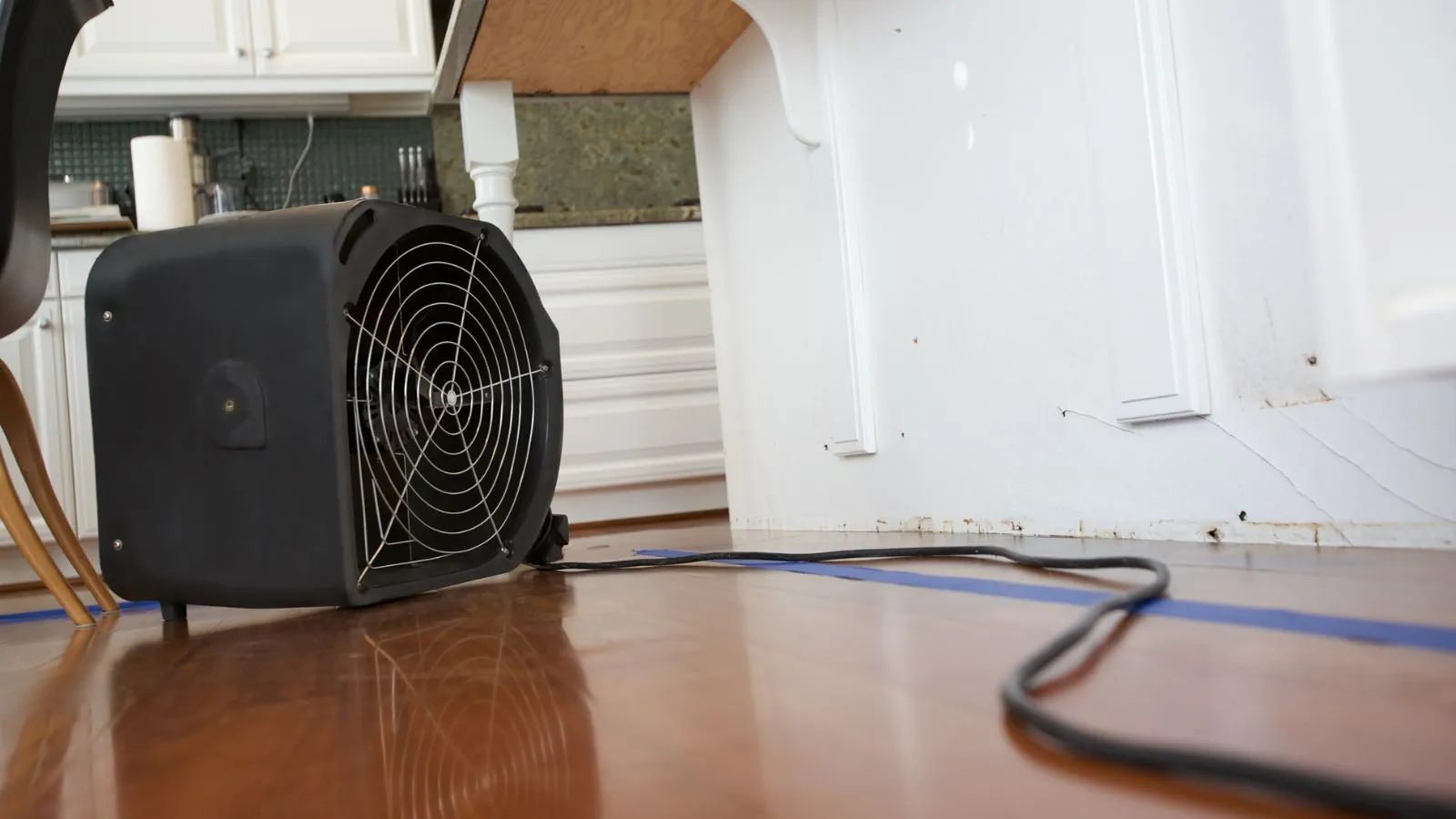
Water in the cabinets is usually bigger than it looks
Kitchen water damage restoration in Uniondale, NY starts with finding where the water actually went, because it rarely stays where it leaked. A slow drip under the sink soaks the cabinet floor, wicks into the toe-kick and creeps into the wall cavity behind it.
The crew dries and removes what the water soaked, and a plumber or appliance technician fixes whatever leaked. The sooner the cabinet base and the space behind it are opened and measured, the more of the kitchen can be dried instead of torn out.
Why kitchens in Uniondale leak where they do
Most kitchen leaks start small. A weeping supply connector, a loose slip nut on the drain trap or a dishwasher hose can run for weeks inside a closed cabinet before anyone sees a stain. By the time you smell it, the particleboard floor of the sink base has often been wet for a long time, so check under the sink every few months.
Long Island has real winters, and a sink on an exterior wall can freeze and split a supply line. The cabinet then fills when the pipe thaws, often while nobody is home. In apartment buildings and the dorm-style housing around Hofstra University, a kitchen leak also drips through the floor into the unit below, so tell your neighbor and your building manager early.
What you can see, smell and hear
Cabinets tell on themselves before the floor does. Open the sink base, pull out the bottles and look with a flashlight at the corners and the back panel.
- A swollen, bubbled or peeling edge on the cabinet floor or the bottom of the doors
- Toe-kick panels that are soft, bowed or stained
- A musty smell when you open the sink cabinet
- Countertop seams lifting or a laminate edge curling near the sink or dishwasher
- Rust on hinges and shelf pins, or mineral crust on the shutoff valves
- Water on the floor of the dishwasher bay after a cycle
- Flooring that cups or lifts along the cabinet base
Particleboard, plywood and solid wood take water differently
What your cabinets are made of decides most of the save-or-replace answer. A moisture meter and a look at a cut edge usually settle it quickly.
Particleboard and MDF boxes
Most box cabinets are particleboard or MDF under a thin laminate or foil skin. Once the core absorbs water it swells, loses its screw-holding strength and does not shrink back. A swollen cabinet floor or shelf is almost always a replace item, even after it dries.
Plywood and solid wood
Plywood boxes and solid wood face frames tolerate a soaking much better. They can usually be dried with directed airflow and then re-checked with a moisture meter. Finish and glue lines may need touch-up, and a door that stayed wet for days can still warp.
Countertops and toe-kicks
Stone, quartz and solid surface tops do not absorb water, but the sink-base rails and the underlayment beneath a laminate top do. Toe-kick boards are cheap to replace and are often the first piece removed, because taking them off opens a path to the wall cavity and the flooring beneath.
How the water is found and the kitchen is dried
The order of work matters more than the equipment. Drying a cabinet while the supply line still weeps only restarts the clock.
- Shut off the valve under the sink or behind the dishwasher, then have a plumber or appliance technician repair the source.
- Map the wet area with a moisture meter and a thermal imaging camera, checking the cabinet floor, toe-kick, the wall behind the cabinet and the floor beside it.
- Remove standing water with a wet vacuum and empty the cabinets so the contents can be sorted.
- Take off the toe-kick and open the back panel or drill small vent holes so air can reach the cavity.
- Remove what cannot be saved, such as swollen shelves, wet insulation and soaked flooring edges.
- Set air movers and an LGR dehumidifier. In tight cabinet bays, use injectidry or drying mats with directed airflow.
- Re-check readings every day until they match a dry reference point, and take photos for your records.
We do not repair the leaking faucet, supply line or drain, because a licensed plumber does that. If the water came from a dishwasher, refrigerator line or similar machine, the failure itself is covered on the page about appliance leak water damage.
Want to talk it through with someone? The dispatch line is open around the clock.
☎ (516) 845-9582Dry in place or tear out: a quick decision guide
| What got wet | Often dried in place | Often removed |
|---|---|---|
| Solid wood face frame and doors | Yes, with directed airflow | If warped or the finish has failed |
| Plywood cabinet box | Often, if wet only a short time | If the layers have separated |
| Particleboard or MDF base and shelves | Rarely | Usually, once swollen |
| Toe-kick and base trim | Sometimes | Often, to open the cavity |
| Laminate top over wet underlayment | Seldom | Usually, if the seam has lifted |
A cabinet that dries to normal readings but has a swollen floor is still a cosmetic and structural call you make with the crew. Keeping it saves demolition, replacing it avoids a shelf that sags under pots later.
What drives the cost of a wet kitchen
Kitchen jobs vary a lot because the same leak can ruin one cabinet or an entire wall of them. These are the factors that move the scope: The call to dry cabinets in place or remove them follows ANSI/IICRC S500, so ask which path your scope takes.
- Water category: clean supply water (Category 1) dries differently from a dirty drain or dishwasher discharge (Category 2 or 3)
- Affected area: one sink base, a run of cabinets, or the floor and wall beyond
- Materials: particleboard and laminate are removed more often than plywood and solid wood
- Drying days and equipment: tight cabinet bays take extra setups and daily readings
- Rebuild scope: replacing a base, a countertop, trim and paint is separate from drying
Insurance affects how the work is documented and paid, but not how long the materials take to dry. To get a real number for your property, call the 24/7 line and describe what you see.
Documenting the loss for your insurer
Photograph the cabinets, the floor and the failed part before anything is cleaned up, and keep the damaged pieces until a settlement is reached. The New York State Department of Financial Services advises filing a claim as soon as possible and keeping receipts for emergency repairs.
A typical homeowners or renters policy may respond to a sudden pipe or appliance leak differently than it does to long-term seepage. Check your policy or ask your insurer, and expect an adjuster to inspect before permanent repairs begin. Our moisture readings and photos can go into your file.
After the drying: rebuild, paint and neighboring walls
Once readings are normal, the kitchen moves to rebuild. That can mean new base cabinets, a reset countertop, trim and paint, and sometimes repair of the wall behind them, which is covered under wall and drywall water damage repair. If the supply line itself burst under pressure, the larger picture is on the burst pipe water damage page.
Dark spots on the cabinet back or a musty smell that persists after drying can mean growth, and in New York a licensed assessor comes before any remediation, as described under mold remediation. Where the floor and wall cavity stay wet, structural drying and dehumidification continues after the cabinets are sorted.
Calls from properties in 11553, 11555 and 11556 go to the dispatcher the same way, at any hour. For the wider coverage map, see the service area page.
Frequently Asked Questions
Can water damaged kitchen cabinets be saved?
Often, yes, when they are plywood or solid wood and were wet for a short time. Particleboard and MDF boxes that have swollen rarely return to shape. A moisture meter reading and a look at the cut edge of a shelf usually tell the crew which camp you are in.
How do I handle water damage under the kitchen sink?
Shut the shutoff valve, empty the cabinet and sop up standing water. Photograph everything, then call a plumber for the leaking part and us for drying. Leave the cabinet door open so air can reach the wet surfaces while you wait.
There is a soft spot at the bottom of my cabinet and it smells damp. What is going on?
That usually means water has been sitting in the cabinet floor for some time, often from a slow drain or supply leak. The soft spot is swollen particleboard. Have it measured before you paint or caulk over it, because the wall and flooring behind may be wet too.
Will the countertop have to come off?
Not always. Stone and solid surface tops usually stay. Laminate tops come off when the seam has lifted or the substrate has swollen. If the sink-base rails must be replaced, the top may be lifted briefly and reset by a cabinet installer.
Does a Uniondale apartment kitchen leak affect the unit below?
It can. Water follows pipes and floor penetrations downward, so a dishwasher or sink leak often shows up as a ceiling stain in the unit beneath. Tell the building manager right away, and keep photos of both units. The ceiling side is handled the way our ceiling water damage repair page describes.