
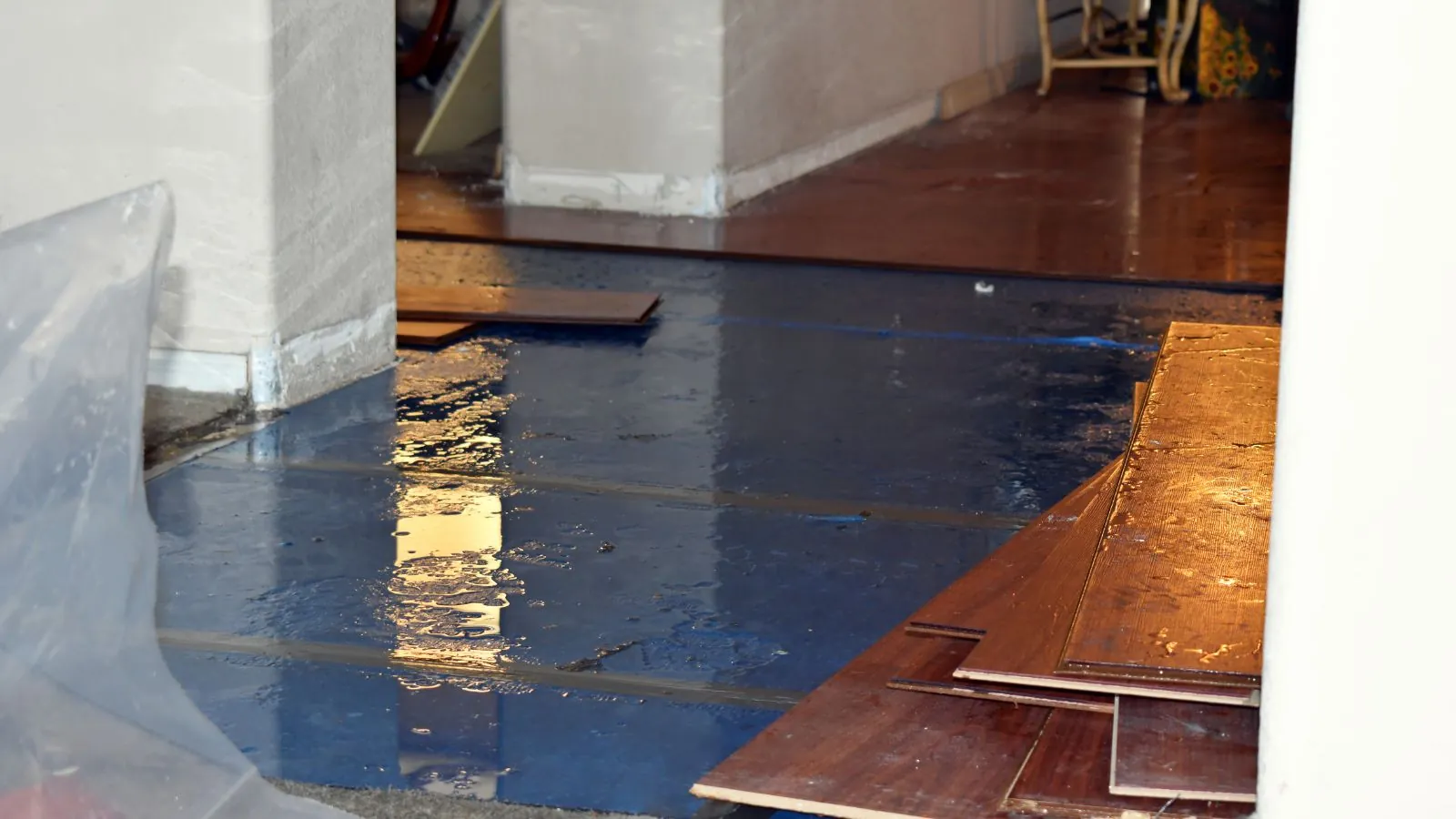
When sewer water is in the house, stay out first
Sewage damage restoration in Uniondale, NY begins with keeping people away from category 3 water, the most contaminated kind. Our 24/7 line is staffed for this, and until the crew arrives, stay out of the affected area, keep children and pets away, and do not run water or flush toilets because it can push more waste in.
If the water is near outlets, an appliance or the panel, stay out and call the utility or 911 before you call us.
- Do not wade in, and do not touch the water or wet items with bare hands
- Close the door to the affected room if you can do it without stepping in
- Call a plumber for a blockage on your side, or the municipality for the main line
- Photograph from a distance before anything is moved
- Do not use a household wet vacuum or fans on sewage
Same-day response when available applies at night and on weekends, because sewage does not wait for business hours.
Toilets and floor drains bubbling, and a bad smell in the basement
Gurgling toilets, a floor drain that bubbles or backs up when the washer drains, and a sour smell in the basement all suggest wastewater is pushing the wrong way. In the trade that is a sewer backup, and the water that reaches the floor is classified as sewage.
At that point the job moves from plumbing to sanitation, which is the part we do.
What makes sewage water different
Under ANSI/IICRC S500, water is sorted into three categories. Category 1 is clean supply water, category 2 is gray and category 3 is black water, which includes sewage and anything that has contacted it. Sewage is always category 3.
That classification changes everything about the job. Crews wear protective equipment, set containment and discard materials that would be dried after a clean leak. We do not make health claims here. We treat the water as a hazard and follow the protocol.
Where backups come from in a Nassau County house
Nassau County lists county-wide sanitary sewers among its groundwater protection measures, and many homes connect to them through a lateral line. Which sewer line serves your property, and who is responsible for the lateral, is a question for the Town of Hempstead or the Nassau County Department of Public Works.
Call them early. A blockage in the municipal main is theirs to clear, while one in your own lateral is a plumber's job, and knowing which is yours decides who you phone first. Flat Long Island ground also means backed-up water in a basement has no quick way out and must be pumped.
Signs of a backup, in the order people notice them
- Gurgling sounds from drains and toilets
- Floor drains or a basement shower that overflow
- Slow drains in several fixtures at once
- A sewage smell near the lowest level
- Dark standing water, or staining that returns
- Water coming up in a tub or shower when you run a washer
The cleanup process, start to finish
The crew works in a set order so contaminated water does not spread to clean rooms.
- Set up containment and put on protective gear, including gloves, boots, coveralls and respirators.
- Extract the water with truck-mounted or portable extraction units and wet vacuums.
- Remove and bag porous materials that cannot be made clean.
- Clean and sanitize hard surfaces and framing with antimicrobial products.
- Dry the structure with air movers and dehumidifiers, using HEPA air scrubbers where needed.
- Take moisture readings until the goal is met, and keep photos and records for the insurer.
Water is spreading right now? The dispatch line is open around the clock.
☎ (516) 845-9582What gets thrown away and what gets cleaned
Anything porous that absorbed sewage is usually discarded. That includes carpet, padding, drywall and insulation, particleboard, upholstered furniture and mattresses. They hold contamination below the surface, and a surface wipe does not make them safe.
Hard, nonporous items like tile, concrete, metal and sealed wood can be cleaned and sanitized. Valuables of sentimental worth are worth discussing with the crew before you decide.
How each material is handled
| Material | After sewage contact | Why |
|---|---|---|
| Carpet and pad | Discard | Fibers and foam hold contamination |
| Drywall and insulation | Cut out and discard | Porous and hard to sanitize |
| Concrete and tile | Clean, sanitize and dry | Nonporous, so it can be treated |
| Framing and subfloor | Clean, sanitize and dry | Solid wood can be treated and dried |
| Upholstery and mattresses | Discard | Absorb and keep contamination |
What a sewage cleanup costs and why
Sewage jobs cost more than clean water jobs, because of safety work and disposal. These are the main drivers.
- Water category, which for sewage is always 3
- Affected area, including how far water traveled and how deep it stood
- Materials involved, since porous finishes are removed and replaced
- Drying days and equipment, plus air scrubbing and containment
- Rebuild scope, covering drywall, flooring, trim and paint
The plumbing repair that stops the backup is priced separately by the plumber. To get a real number for your property, call the 24/7 line and describe what you see.
Is a sewer backup covered?
The New York State Department of Financial Services says water backup and sewage backup damage may be covered only if a water back-up endorsement was added to the policy. Such policies typically exclude backup caused by flood. Check your policy now, and ask your insurer what yours says.
File as soon as possible. Document your losses before cleaning anything up, keep an inventory with proof of value and keep damaged property until a settlement is reached. Emergency steps to protect health or safety are allowed, so save receipts, while permanent repairs wait for the adjuster.
Where we work and what we do not do
We do not clear the blocked line or repair the sewer lateral. A licensed plumber does that, or the municipality for its own main.
Our listed coverage for this work is ZIP codes 11553, 11555 and 11556. If the water came with rising floodwater, see flood damage restoration. A flooded lower level is covered in basement water damage cleanup, and the removal step is described in water extraction methods. For the equipment after cleaning, read how structures are dried.
Frequently Asked Questions
Do you handle sewage backup emergencies at night or on weekends in Uniondale?
Yes. The dispatch line runs 24/7, and sewage calls are treated as urgent. We offer same-day response when available, without promising an arrival time. Keep people out, avoid running water and call your plumber or the municipality for the line while the crew is scheduled.
Toilets and floor drains are bubbling and the basement smells. What do I do?
Stop using water so nothing more is pushed into the line. Keep everyone out of the wet area and call a plumber for the blockage. If water has reached the floor, call us for extraction and sanitizing. Take photographs from a distance for your insurer.
Who is responsible for the sewer line, me or the town?
It depends on where the blockage is. The lateral from your house to the main is often the owner's, while the main is municipal. Ask the Town of Hempstead or the Nassau County Department of Public Works, since the answer depends on your property.
Can I clean up sewage myself?
It is not advised. Sewage is category 3 water and needs protective gear, containment and proper disposal. Wet vacuums and fans can spread contamination. If you must act before help arrives, limit it to keeping people and pets out and photographing the area.
Will insurance pay for a sewage backup?
It may, but only if your policy has a water back-up endorsement, according to the New York State Department of Financial Services. Standard policies typically do not cover it, and backup caused by flood is usually excluded. Read your policy and ask your insurer.
Can I keep my carpet after sewage damage?
Almost never. Carpet and pad are porous and are normally discarded after sewage contact. The crew explains each item in the written scope so you can see what is going and why, before work starts.