
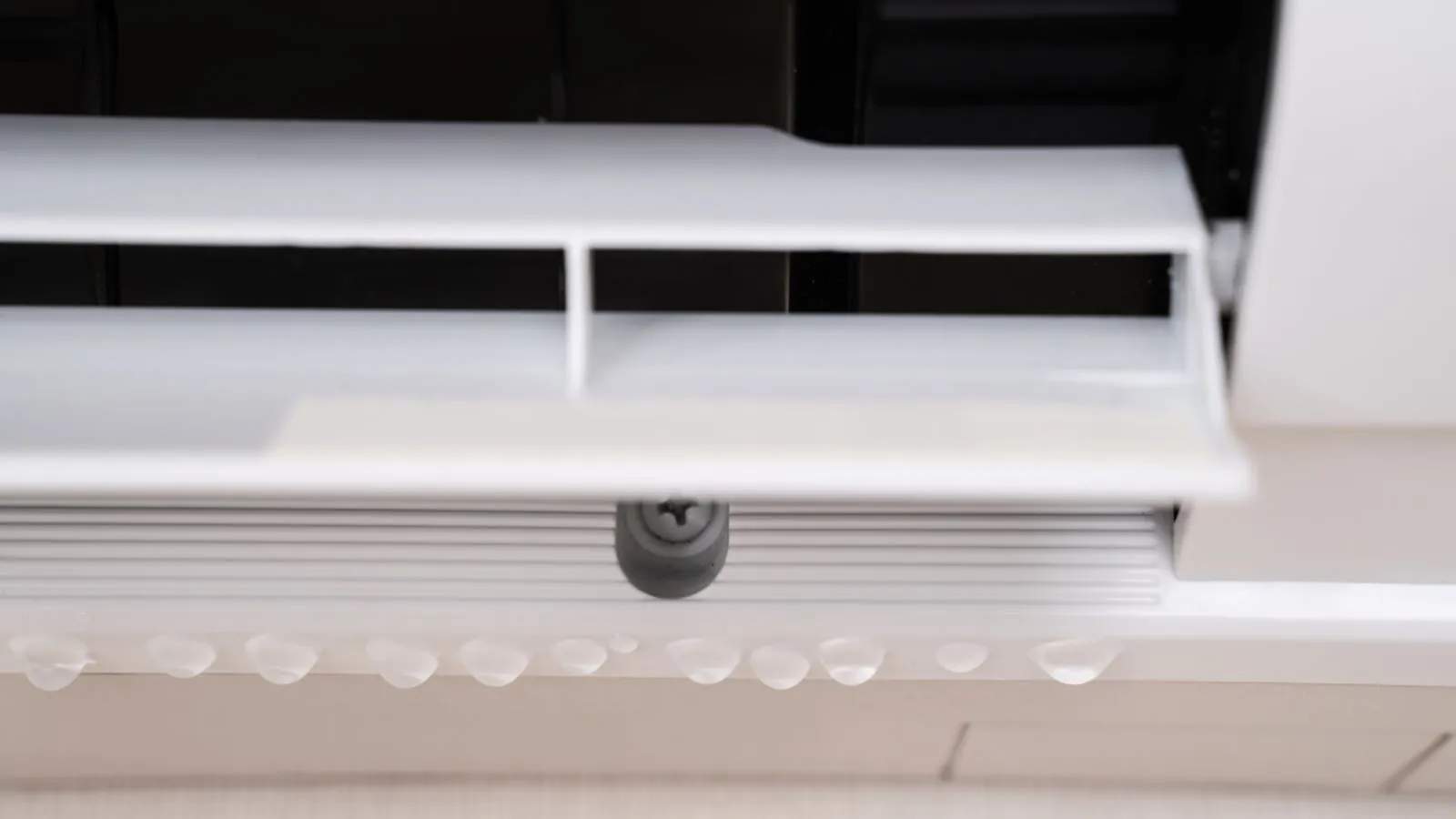
A brown ring on the ceiling and an air conditioner above it
AC leak water damage in Uniondale, NY is almost always condensate, the water a cooling system pulls out of the air, running somewhere other than its drain. It shows up as a yellow or brown stain, a bubbled paint patch, a soft spot in drywall or a damp closet floor beside the air handler.
These leaks tend to be slow. The water soaks insulation and the back of the ceiling board for weeks before anything is visible from the room below.
This page covers what that water does to a house and how a crew dries it. Fixing the air conditioner itself is a separate job, covered further down.
Where the water actually comes from
Four failures account for most of the calls that involve a cooling system and a wet building. Each leaves a slightly different pattern of damage.
A clogged condensate drain line
Algae and slime narrow the small drain pipe until water backs up and spills over the drain pan. The stain usually sits right under the air handler or along the pipe route.
An overflowing secondary pan
Many air handlers sit in a second pan meant to catch the first failure. When that pan fills too, the water reaches the ceiling, and by then the leak has been running for a while.
A frozen evaporator coil that melts
Low airflow or low refrigerant can ice the coil over. When the unit is switched off or the ice thaws, a large volume of water comes off all at once and can outrun the pan.
Attic and closet air handlers
Equipment above finished rooms or tucked in a hall closet hides the leak. Water travels along framing and shows up several feet from the source.
Why humid summers matter here
Long Island summers are humid, and a cooling coil removes far more water from muggy air than from dry air. That water leaves through one small line, so a drain that coped in June can clog by August.
For a Uniondale homeowner the practical point is timing. A stain that appears in late summer often means the line has been struggling for weeks, so the framing and insulation around it deserve a moisture check, not just a repainted ceiling.
Signs the water is already inside the ceiling or wall
- A stain that grows or darkens each time the air conditioner runs
- Paint that bubbles or drywall that feels soft or cool to the touch
- A musty smell near a closet, hallway or the room under the attic
- Water in the drain pan or on the floor around the air handler
- Dripping or a ceiling that sags slightly between the joists
- A cooling system that blows weakly or ices over before the leak shows
If the stain is dry and old, the problem may have been fixed years ago. A moisture meter reading tells you which it is.
Window units and central systems leak differently
A window unit usually drips because it is tilted wrong or its drain hole is blocked. The damage tends to be one wet sill, the wall below it or a patch of floor, and the volume is small.
A central system is the one that stains ceilings. Its air handler can release a lot of water, and it often sits where no one looks. Treat the two as different problems, and expect a window unit leak to be the quicker one to dry out.
How the crew finds and dries hidden moisture
The dispatch crew starts by confirming the water is condensate and not a supply line, then maps how far it went. Order matters because wet insulation holds water against the ceiling board.
- Switch the system off at the thermostat so it stops making condensate.
- Scan ceilings and walls with a moisture meter and a thermal imaging camera to outline the wet area.
- Remove soaked insulation and any drywall that has sagged or lost strength.
- Set air movers and a dehumidifier, and add drying mats where a wall cavity needs forced air.
- Read the meters again each visit until the framing and board reach the drying goal.
- Record readings and photos so the file is ready for an adjuster.
Dry in place or open it up
Both choices are legitimate, and the right one depends on how long the leak ran.
Drying in place
Works for a recent leak where the ceiling board is still firm and the paint is intact. It costs less and creates less dust, but it only works if readings come down.
Removing and replacing
Needed when the board is soft, stained through or the insulation stayed wet for weeks. It lets the cavity dry faster and lets you see the framing, at the price of patching and repainting afterward.
Want to talk it through with someone? The dispatch line is open around the clock.
☎ (516) 845-9582Which damage calls for which response
| What you see | What is likely behind it | Usual response |
|---|---|---|
| Small stain, firm ceiling | Recent drain overflow | Moisture check, dry in place, then repaint |
| Sagging or soft ceiling board | Long-running pan overflow | Cut out the wet section, dry the cavity, patch |
| Wet closet or hall floor | Air handler leak at floor level | Extract water, dry flooring and baseboard |
| Wall damp below a window unit | Blocked or tilted unit | Dry the wall and sill, check the base for staining |
| Musty odor, no visible stain | Hidden moisture in insulation | Thermal scan and meter readings before opening anything |
Preventing water damage from an HVAC system
Prevention is cheap compared with a ceiling replacement, and none of it is our work. An HVAC technician handles these steps, and a homeowner can watch for the warning signs.
- Have the condensate line cleared and checked before the cooling season
- Ask about a float switch that shuts the system off when the pan fills
- Replace the filter on the schedule the equipment calls for, since poor airflow ices coils
- Look at the secondary pan now and then, and never ignore standing water in it
- Treat a system that freezes up as a service call, not a reset
We do not repair, recharge or replace the air conditioner, and we do not clear the drain line for good. An HVAC technician does that, and it should happen before the structure is dried or the leak will return.
What drives the cost of an AC leak cleanup
Condensate is usually treated as lower-risk water, but it can pick up dirt in a pan or attic, and that changes the category. These are the factors that set the price of the work.
- Water category (1, 2 or 3) and how long the water sat
- Affected area, including how far water traveled inside the cavity
- Materials involved, such as insulation, drywall, plaster or flooring
- Drying days and equipment count, since a closed attic needs more airflow
- Rebuild scope, meaning patching, paint and any ceiling replacement
The crew explains scope and price before work starts. To get a real number for your property, call the 24/7 line and describe what you see.
Insurance and what to document
Whether a slow or hidden leak is covered depends on the wording of your policy, so check your policy and ask your insurer before assuming either way. The New York State Department of Financial Services advises documenting your losses before cleaning anything up, so take photos or video of the stain, the pan and the air handler first.
File a claim as soon as possible, keep a list of damaged items, and keep damaged material until a settlement is reached. Permanent repairs should wait until the insurer has inspected, though emergency steps to protect the property are allowed, and you should save those receipts.
Related damage and where we work
A stained ceiling is covered in more detail on our ceiling water damage repair page, and wet drywall below it is handled the way described under wall and drywall water damage.
The equipment and monitoring behind the process are explained in how structural drying works. If the cavity stayed wet long enough to grow mold, the sequence is on the mold remediation page.
We dispatch to homes and businesses in the 11553, 11555 and 11556 ZIP codes, including houses where the air handler sits above finished rooms. See the full Uniondale service area for nearby communities.
Frequently Asked Questions
Can a clogged AC drain line really ruin a ceiling?
Yes. The drain line carries all the water the coil removes from the air. When it clogs, the water overflows into the pan, then the secondary pan, then onto the ceiling or floor. Because it happens during cooling season and out of sight, the damage can build for weeks. A moisture meter shows how far it spread.
The ceiling under my attic AC has a brown ring that keeps growing. What is going on?
A ring that grows each time the system runs usually means condensate is still reaching the ceiling board. Switch the cooling off, put a bucket under any drip and avoid poking the bulge. Call for a moisture check, and have an HVAC technician find why the water is escaping.
Is AC condensate clean water?
It starts out fairly clean, but it often crosses dusty attics, old insulation and slimy pans before it lands. Restoration crews classify water by category under ANSI/IICRC S500, and condensate that sat for days is not treated as clean. The category affects what is removed and what is cleaned.
Do hot Uniondale summers make AC leaks more likely?
Humid summers make the coil produce more water, and the drain line has to carry all of it. A line that is partly clogged by spring may overflow by late summer. If you saw a stain after a muggy stretch, have the ceiling checked even if it looks dry now.
Will I need mold remediation after an AC leak?
Not always. If the area is dried quickly and readings come down, mold may not become a problem. If you do see growth, New York requires licensed professionals for projects over 10 square feet, and an assessor writes the plan before a separate remediator works.
Do you repair the air conditioner too?
No. We dry and restore the building. An HVAC technician repairs or replaces the equipment, clears and protects the drain line and checks the coil. Ideally they fix the cause first, so the structure is not dried and then wetted again the next time the system runs.