
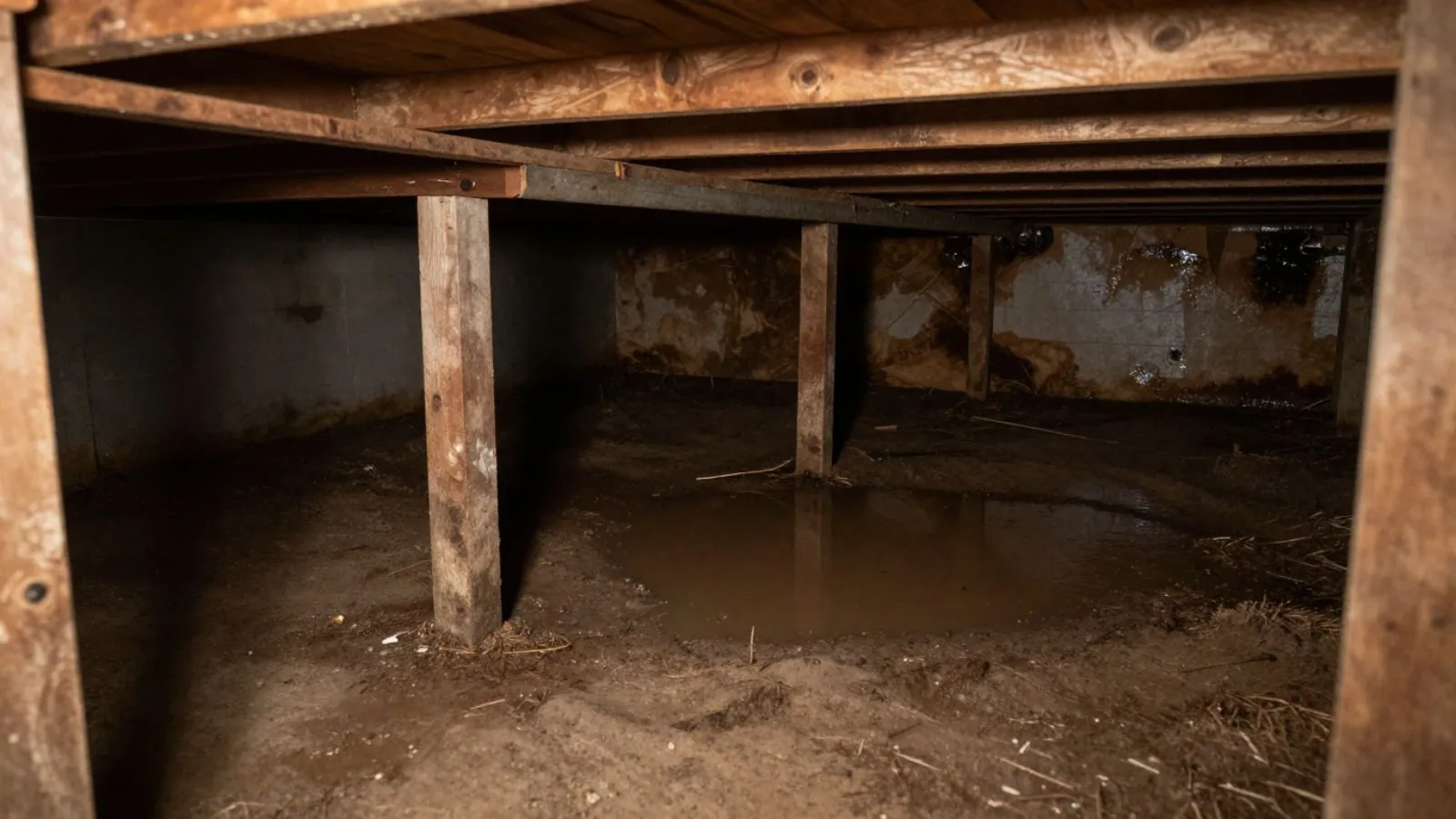
The wet space under the floor that nobody looks at
Crawl space water damage in Uniondale, NY is moisture or standing water in the shallow void between the ground and the first floor, where it soaks insulation, wood joists and the subfloor above. Because the space is dark and cramped, a leak or a flooded crawl space can sit for weeks before a smell or a spongy floor gives it away.
The air in that void rises into the rooms above, so a wet crawl space can affect the whole house.
Crawl spaces here are less common, but they exist
Basements are far more common than crawl spaces on Long Island, so this page is for the homes and additions that do have one. Typical examples are a rear addition built on short foundation walls or a house with a partial under-floor void.
Uniondale sits on flat Long Island ground, so rain that pools around a foundation has nowhere quick to drain. If your crawl space has vents or a low spot, that water can enter, and pumping becomes the first priority. If you have a basement instead, see basement water damage cleanup.
What puts water under a house
- A leaking supply line or drain that runs through the joist bay
- Rain or runoff entering through vents, a window well or a cracked wall
- A failed sump pump, or no pump at all in a low crawl space
- Humid air condensing on cool pipes, ducts and the underside of the floor
- A missing or torn vapor barrier over the soil
- Heavy storms that bring flooding in from outside
Each source calls for a different fix. A pipe leak is a plumber's job, while a drainage problem points toward a waterproofing or drainage contractor.
How to tell the crawl space is wet
Most owners notice it from above. Floors feel soft or bouncy near an exterior wall, hardwood cups, doors stick and a damp, earthy odor appears in the rooms above, especially when the weather turns humid.
If you can look in safely, standing water, dripping pipes, insulation hanging down in wet clumps and white or dark patches on the joists are all clear signs.
Do not crawl in alone if there is standing water near wiring, ducts with electrical connections or a pump. Call first.
How the cleanup works step by step
A flooded crawl space cleanup is physical work done in tight quarters, so the crew plans access and power before going in.
- Stop the source, whether that is a shut-off at the main valve or a plumber's repair.
- Check for electrical hazards and shut off power to the space if it is safe to do so.
- Pump out standing water with submersible pumps, then pull the rest with wet vacuums.
- Remove wet fiberglass insulation, torn vapor barrier and debris that cannot be cleaned.
- Clean and treat wood and surfaces with antimicrobial products, then dry the joists and subfloor with air movers and dehumidifiers.
- Measure with moisture meters and record the readings each visit until the wood reaches the drying goal.
Water that came from outside or a sewer line is category 3 and handled with more protection. See the sewage backup cleanup page if that applies.
Dry the space, or remove and rebuild
Dry in place
Joists, subfloor and sound beams can usually be dried when they are solid. This is the better route for a recent event, since it keeps the structure and costs less than rebuilding.
Remove and replace
Insulation that was wet is removed and replaced, not dried. Rotted wood, a torn vapor barrier or a floor that has begun to sag has to come out too, and a carpenter does the repair.
Fix the cause
A new vapor barrier, a drain or a sump pump keeps the problem from returning. These belong to a contractor who installs them, and they are worth pricing alongside the cleanup.
Want to talk it through with someone? The dispatch line is open around the clock.
☎ (516) 845-9582Which problem needs which response
| Condition | What it usually means | Typical response |
|---|---|---|
| Inches of standing water | Flooding, pipe failure or pump loss | Pump out, remove insulation, dry, then fix the cause |
| Damp soil, no standing water | Seepage or humid air | Moisture check, vapor barrier repair, dehumidification |
| Wet insulation only | Pipe leak or condensation | Replace insulation, dry joists, find the source |
| Spongy floor above | Wet subfloor or joists | Moisture mapping, open the floor if needed |
| Dark patches on wood | Long-term moisture | Dry the space and ask about a licensed mold assessor |
What a crawl space cleanup costs and why
Cleanup prices vary widely because of the space. Access is tight, and crews work on their hands and knees, which slows everything. These five factors drive the number. ANSI/IICRC S500 covers drying wet structural framing, the part of a crawl space job that decides how long equipment stays.
- Water category, from clean supply water to flood or sewage water
- Affected area, including the depth of standing water and square footage under the home
- Materials involved, such as insulation, a vapor barrier, wood and ductwork
- Drying days and equipment, which depend on soil moisture and ventilation
- Rebuild scope, covering floor repair and any waterproofing or drainage work
Drainage improvements are quoted by the contractor who installs them, not by us. To get a real number for your property, call the 24/7 line and describe what you see.
Insurance and the flood question
A typical homeowners policy does not cover flood damage, which needs separate flood insurance, according to the New York State Department of Financial Services. Water that comes from a burst pipe is treated differently from water that comes in from the ground, so ask your insurer how your policy reads for each.
Document your losses before cleaning anything up. Photograph the space, keep an inventory and keep damaged material until the settlement is reached. Permanent repairs should wait until the insurer has inspected.
Limits of what we do and where we work
We do not install sump pumps, regrade yards or waterproof foundations. A drainage or waterproofing contractor and a plumber handle those, and we coordinate drying around their schedule.
We dispatch to homes and businesses in the 11553, 11555 and 11556 ZIP codes for crawl spaces and the additions built over them. The equipment and monitoring that dry the wood are covered in structural drying and dehumidification. If mold appears, read mold remediation in New York first, and for large storm events see flood damage restoration.
Frequently Asked Questions
Is crawl space water damage common in Uniondale?
We cannot give a local frequency, since crawl spaces depend on how each home and addition was built. Crawl spaces turn up under additions and some houses. If yours has one and the ground is flat around the foundation, rainwater can pool near the walls and find its way in.
My floors feel spongy and the house smells musty. Could it be the crawl space?
Yes, if the home has an under-floor space. Soft spots and a damp smell point to wet joists or subfloor. A moisture meter on the floor and a safe look below tell us whether it is a leak, condensation or outside water. Do not enter if there is standing water.
Can you pump out a flooded crawl space?
Yes, with submersible pumps and wet vacuums, followed by removing wet insulation and drying the wood. Before anyone goes in, power to the space is checked. The crew also looks for where the water came in, since pumping alone does not stop a recurring problem.
Do you fix the vapor barrier or add drainage?
We remove a damaged vapor barrier as part of cleanup. Installing a new one, a sump pump or a drainage system is done by a drainage or waterproofing contractor. We can coordinate drying so the space is ready for their work.
How long does it take to dry a crawl space?
It depends on the water volume, the soil, the wood and how much air can move. Wood and soil release moisture slowly, so readings decide when drying ends. Anyone quoting a fixed number of days before looking is guessing.
Will mold grow under the house?
It can if wood and insulation stay damp. Fast drying lowers that risk but nothing prevents it for certain. In New York, a licensed assessor writes the plan for projects over 10 square feet, and a different licensed company does the remediation.