
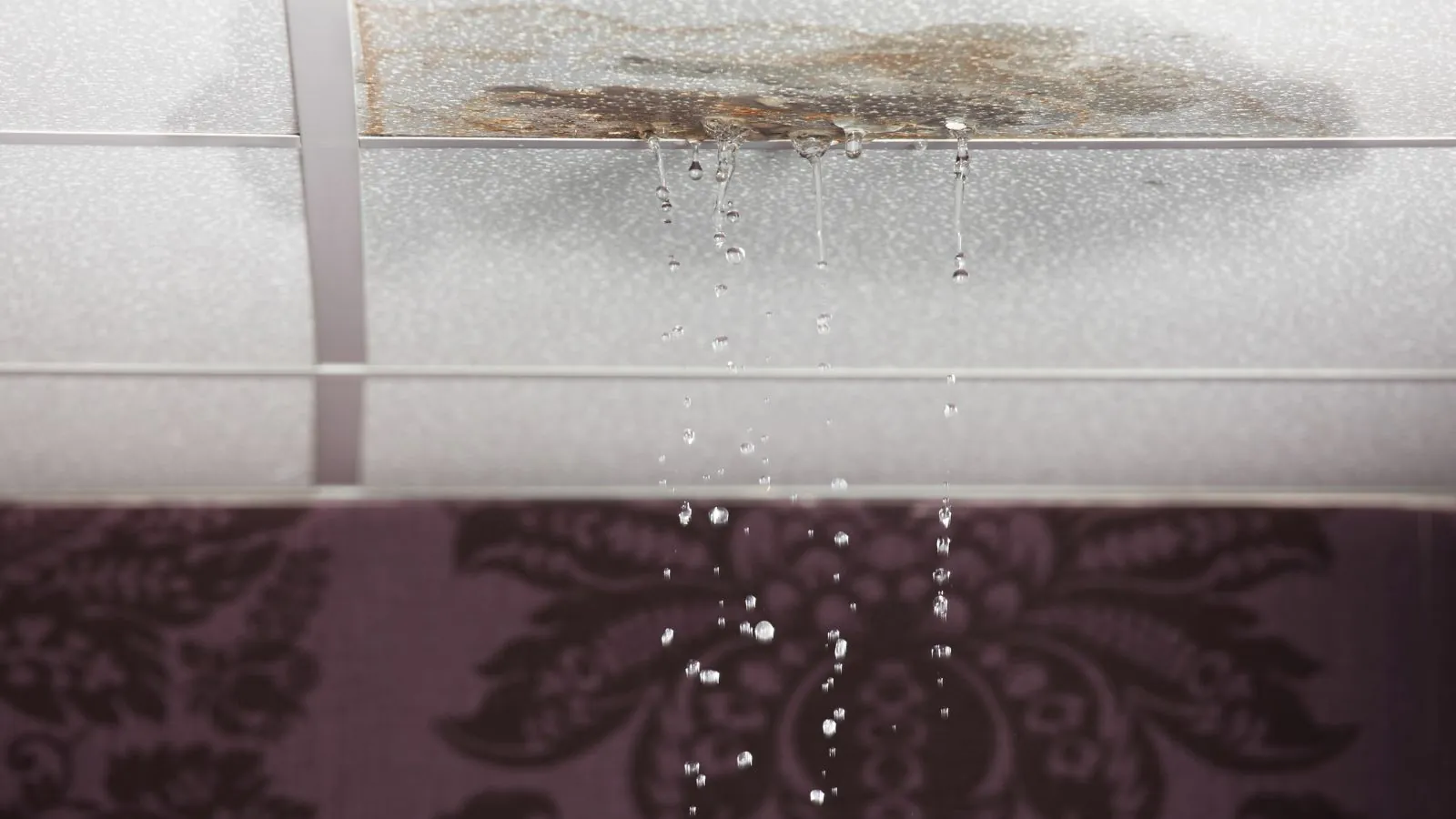
A brown ring on the ceiling is only the part you can see
Ceiling water damage repair is the work of finding where water is trapped above a finished ceiling, drying the space, and restoring the surface. In Uniondale, NY, a water damage ceiling stain usually points to a leak in the attic, an upstairs bathroom, a supply line or the roof. This is an emergency, the 24/7 line is open, and a sagging ceiling can fail without warning.
Stay out from under a bulging or sagging ceiling and keep people and pets away. Move furniture out of the room if you can do it without standing beneath it. Shut off the main water valve if the source could be a pipe, and call the utility or 911 first if water is near a fixture or you smell gas.
When a wet ceiling is an emergency
A drip is urgent, but a bulge is dangerous. Water collects in the drywall and insulation until the weight pulls the board loose, and it can drop all at once. Same-day response when available applies, and the after-hours line handles ceiling calls overnight and on weekends.
Do not poke a hole in a bulging ceiling to drain it. Some people do it to relieve pressure, and it is a real safety step only when a trained crew does it with the area cleared and a catch container ready. If you see sagging, call and stay out of the room.
- A bulge or sag that you can see from the doorway
- Water dripping from a light fixture or smoke detector
- Cracks along the seam or a ceiling that feels soft
- Brown water running down a wall
- Active dripping from more than one spot
Roof leaks that end up as ceiling damage
Roof water damage rarely shows up directly below the leak. Water from a damaged shingle, flashing or vent enters the roof deck, runs along a rafter, soaks the insulation and then appears as a stain several feet away. By the time you see it, the attic side of the drywall has often been wet for days. Look for stains that darken after rain and fade in dry weather.
A roof leak water damage call has two sides. A roofer fixes the roof, and we dry and restore the interior, which means removing wet insulation, drying the framing and replacing the drywall that failed.
Water damage from a leaking roof usually follows rain, so photograph the stain after each storm and check the attic if you can reach it safely. Tarping the roof is a roofer's job, and if you can arrange it quickly, it limits the next round of damage while the ceiling is being dried and repaired.
Other sources above the ceiling
Not every wet ceiling is a roof problem. An upstairs bathroom with a failed wax ring, tub overflow or leaking supply line can wet the ceiling below, and so can an attic air handler with a clogged drain, which is the subject of AC leak water damage.
A pressurized line that splits inside the floor joists can saturate a ceiling quickly, a case discussed under burst pipe water damage. A moisture meter and thermal imaging camera help trace which source is active.
Why Uniondale ceilings stay wet longer than they look
Long Island has humid summers, and warm moist air can slow drying in attics and closed ceiling cavities. A wet ceiling in August may not dry on its own, and the insulation above it can hold water for weeks.
In multi-unit buildings along the Hempstead Turnpike corridor, a leak from the unit above may be a neighbor's pipe. Report it to the building manager as well, so the source is shut before the crew starts.
How the ceiling is assessed and repaired
The crew starts by stopping or isolating the source, then maps moisture with a meter and thermal imaging camera. Wet insulation is removed and bagged, and soaked drywall is cut out in sections so the cavity can be dried with air movers and a dehumidifier.
After readings return to normal, the ceiling is patched or replaced, textured and primed for paint. Sealing stain-blocking primer over a dry ceiling prevents the brown ring from bleeding back. Wall damage from the same leak follows the process on wall and drywall water damage repair.
Water is spreading right now? The dispatch line is open around the clock.
☎ (516) 845-9582Patch, cut out or replace the whole ceiling
A stain alone does not always mean the board must come down. The decision depends on moisture, sag and how long the drywall was wet.
| Condition | Usual choice | Reason |
|---|---|---|
| Light stain, board still firm | Dry in place, seal and repaint | Board is intact and readings are low |
| Soft or sagging section | Cut out and replace the section | Wet gypsum loses strength |
| Wet insulation above | Remove insulation and dry the cavity | Insulation holds moisture |
| Whole ceiling bulging | Controlled removal, then rebuild | Collapse risk and widespread wetness |
| Repeated leak at one spot | Find and fix the source before repair | Repairing first wastes the work |
Drying equipment and monitoring follow the sequence under structural drying and dehumidification.
What shapes the cost of ceiling repair
Ceiling jobs range from one patched square to a full room rebuild. These factors set the scope: ANSI/IICRC S500 treats water that has soaked through insulation and ceiling materials with more caution than a fresh clean source, so ask how a crew classifies yours.
- Water category: clean supply water versus gray water from a drain or contaminated roof runoff
- Affected area: size of the ceiling and any walls below
- Materials involved: drywall, texture, insulation and fixtures
- Drying days and equipment: air movers and dehumidifiers in the room and attic
- Rebuild scope: patching, texturing, priming and paint
Roof repair is billed by the roofer and plumbing by the plumber. To get a real number for your property, call the 24/7 line and describe what you see.
Insurance for a damaged ceiling
Check your policy and ask your insurer how it treats the source, since roof, pipe and appliance leaks can be handled differently. File as soon as possible and document before cleanup, with photos of the stain, the attic side and the roof if you can safely see it.
Save the wet insulation and damaged board until the adjuster has seen it. Emergency steps to prevent more damage are allowed, and receipts should be kept. Hold off on permanent repairs until the insurer has had a look.
Who we dispatch and where we stop
We dispatch licensed and insured restoration professionals to homes and businesses in the 11553, 11555 and 11556 ZIP codes, plus neighbors such as Westbury, Garden City and East Meadow. You can confirm your address on the service area page.
We do not replace shingles, flashing or a roof. A roofer fixes the roof, and a licensed plumber or HVAC technician fixes the source if it is inside the house.
Frequently Asked Questions
Do you handle ceiling water damage emergencies at night or on weekends in Uniondale?
Yes. The line runs 24/7, and a ceiling that starts dripping at midnight is routed to the next available crew. Arrival depends on the crew and the roads, so we do not promise a time. Stay out from under the ceiling and call.
Should I poke a hole in a bulging ceiling to let the water out?
Do not do it yourself. A bulging ceiling can collapse, and the water and insulation come down with it. Stay out from under it, clear the room and call. A trained crew can release the water in a controlled way with the area protected.
There is a brown stain on my ceiling but it is not dripping. Is it urgent?
Yes, in most cases. A dry stain may be old, but a damp one means water is still present above. Press it lightly with a gloved hand. If it feels soft, call the line and check the attic or roof after the next rain.
Can a roof leak cause water damage inside the house?
Yes. Roof leaks travel through the deck and insulation and show up as ceiling stains, sometimes far from the hole. A roofer repairs the roof, and a restoration crew dries and restores the interior so mold and sagging do not follow.
Is a ceiling leak in a Uniondale apartment my responsibility?
It depends on your lease and the source. Tell your building manager right away, since a leak from the unit above or the roof is usually theirs to arrange. Photograph the damage, protect your belongings, and ask your renter's insurer how your policy applies.
How long before the ceiling can be painted?
Painting waits until moisture readings show the drywall and framing are dry, which usually takes several days of drying. Patching and priming follow, then paint. Painting too early traps moisture and the stain comes back. Ask the crew to confirm the readings before you schedule the painter.