
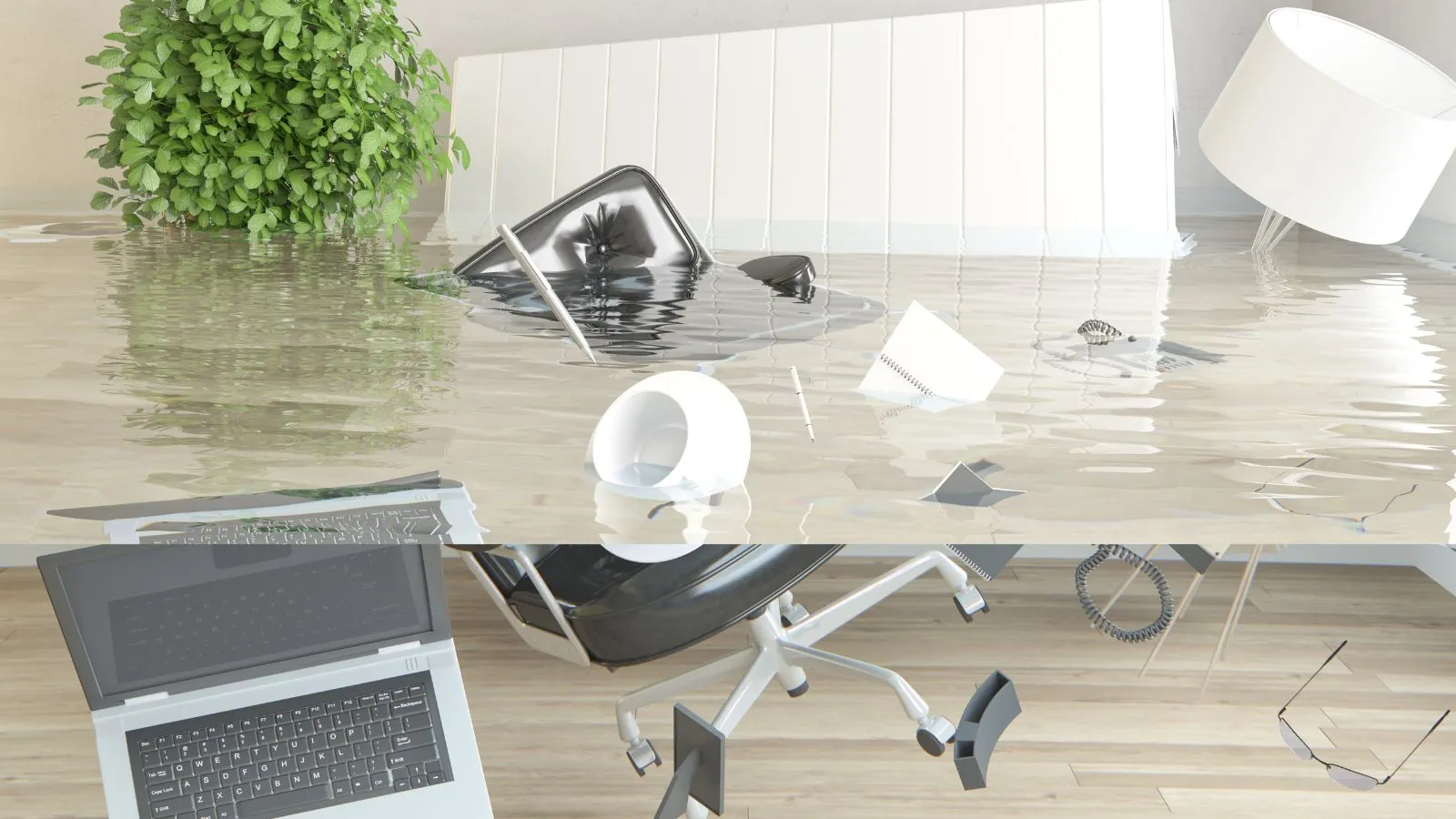
Power first, then everything else
When water reaches electronics, the first question is not what it will cost to replace. It is whether anything in the wet area is still energized. Electricity and water together can injure or kill, and a device that looks ruined is often the least dangerous thing in the room.
This guide is for homeowners and renters in Uniondale, NY who have water near computers, televisions, chargers, power strips or small appliances. It covers safe steps, what not to do, and how to document losses. It does not tell you how to repair a device, and it does not replace an electrician.
How water actually harms electronics
Water on a circuit board can bridge contacts that should stay separate. If power is applied, that can cause a short, heat and permanent damage. Even after the surface looks dry, moisture and mineral residue left inside can corrode contacts over the following days.
That is why a device that was wet and then seems to work can fail later. Keep wet devices off and unplugged until someone qualified has looked at them.
When to unplug and when to stay back
The federal Ready campaign advises people not to touch wet electrical equipment or stand in water while doing so, and to turn off electricity only if it is safe to do so. Safety decides every step here. Use the sequence below, and stop at the first step that does not apply.
If the outlet is not near water, your hands are dry and you are standing on a dry floor, you may unplug the device. If there is water on the floor around the outlet or power strip, do not reach for it. Instead, turn off power at the breaker, but only if the electrical panel is dry and you can reach it without crossing wet floor.
- Keep people and pets out of any room where water touches outlets, cords or power strips.
- If the outlet, your hands and the floor are all dry, unplug the device by the plug, never by pulling the cord.
- If the floor or outlet is wet, do not touch the plug. Go to the panel only if it is dry and you reach it over dry floor, and switch off the breaker for that area.
- If the panel is wet, the path to it is wet, or you see sparks, smell burning or hear buzzing, stay out and call the electric utility or 911.
- Once power is off, leave the devices where they are until the area is safe to enter.
Do not use a wet vacuum, a space heater or any plug-in tool in the wet room until the power question is settled.
Decision table: what to do with each wet item
Once you can safely enter the room, sort items by what they are. The table below is a simple decision framework, not a repair guide.
| Item | Do | Do not |
|---|---|---|
| Laptop, phone or tablet | Move it to a dry spot with power off. Record the make, model and serial number. | Press the power button or plug in a charger to test it. |
| Television or monitor | Unplug only if safe, then leave it in a dry area for a technician to assess. | Turn it on to see whether it still works. |
| Power strip, extension cord or charger | Set aside for replacement. | Plug anything else into a strip that took on water. |
| Small appliance | Keep unplugged and set aside for evaluation by a professional. | Run it to check, even if it looks dry. |
| Wall outlet or switch that got wet | Keep it off and have a licensed electrician check it. | Switch the breaker back on to find out. |
| Device with a battery | See the battery cautions below. | Charge it or leave it in a closed, warm spot. |
Photograph each item and its label before moving it, so you have a record if you end up repairing or replacing.
Batteries and cordless devices
Phones, laptops, power tools and cordless vacuums all carry batteries, and a water-exposed battery should be treated cautiously. Do not charge a battery that was wet. If one is swollen, hot, leaking or smells odd, move it away from anything flammable if you can do so safely, and call 911 if you see smoke.
Do not toss damaged batteries into household trash or a recycling bin. Ask the Town of Hempstead or Nassau County how to dispose of them, and hold onto them until your insurer has seen the loss.
Want to talk it through with someone? The dispatch line is open around the clock.
☎ (516) 845-9582Appliances and wiring need a professional look
A U.S. Consumer Product Safety Commission flood-safety release says to discard electrical or gas appliances that have been wet because they pose electric shock and fire hazards. It also says to have a professional or your gas or electric company evaluate your home before you use appliances again, and to replace controls, circuit breakers and fuses that were under water. The release is from 2008, so ask your electrician what applies today.
In practice, a licensed electrician decides whether wet outlets, breakers and wiring are safe. We do not repair wiring, and a restoration crew does not clear electrical systems for use. Water that ran down a wall can hide inside the cavity near an outlet, and crews check for that with moisture meters and a thermal imaging camera.
Record the loss for your insurer
The New York State Department of Financial Services tells policyholders to take photos or video of the damage before cleaning anything up, to keep an inventory with receipts or proof of value, and to keep damaged property until a settlement is reached. For electronics, add the model and serial numbers. Check your policy and ask your insurer how it treats electronics, since coverage depends on the source of the water.
The same page says permanent repairs should wait until insurers have inspected, while emergency repairs that limit further damage are different. Save every receipt, including for a temporary power cord or a replacement strip that you buy while you wait.
Get the water out so it stops reaching the outlets
Devices stay at risk for as long as the room stays wet. Crews remove standing water with portable or truck-mounted extraction units, then dry the structure with air movers and dehumidifiers while a moisture meter shows where dampness hides.
You can read more about water extraction and cleanup in a flooded lower level, and we dispatch across Uniondale and nearby areas.
Uniondale terrain and where the outlets sit
Uniondale sits about 52 feet above sea level on flat Long Island ground. Water that collects on flat ground has nowhere quick to go, so it tends to spread across a floor and reach every low outlet, power strip and cord in the room.
Take that seriously when you assess a loss. The lowest outlets, floor-level power strips and anything plugged in near a doorway or lower level are the most likely to be wet, so check there first and keep away until the power question is settled. The New York State Department of Financial Services guidance on disaster recovery is the source for the documentation steps above.
Frequently Asked Questions
Can I turn on a wet phone or laptop to see if it still works?
Do not. Power applied to a wet circuit can short it and turn a recoverable device into a ruined one. Leave it off and unplugged, record its model and serial number, and ask a repair technician whether it is worth attempting.
What if I cannot safely reach the outlet?
Do not reach across wet floor. If the electrical panel is dry and reachable over dry floor, switch off the breaker for that area. If it is not, stay out and call the electric utility or 911. Water and live power in the same space is an emergency.
Is it safe to use an appliance that was only splashed?
Not until it has been checked. A Consumer Product Safety Commission release says wet electrical appliances pose shock and fire hazards and should be discarded. If you are unsure, keep it unplugged and have a professional evaluate it before use.
Will my insurance cover water damaged electronics?
It depends on your policy and the source of the water. Flood damage is typically excluded from a homeowners or renters policy, and backup damage may need an endorsement. Document everything and ask your insurer, because we cannot say whether a loss is covered.
Can water from the apartment upstairs affect my outlets in Uniondale?
Yes, it can. Water from a unit above can run down inside walls and reach outlets and wiring below, even when the floor looks dry. Do not use outlets on a wet or stained wall, tell your building management, and photograph the damage. Shared-wall leaks are a real concern in any multi-unit building, so report it early.