
Two estimates arrive on the same afternoon
One is a page and a half. The other runs five pages with room names, equipment counts and a list of what is not included. Both claim to cover the same wet living room, and the totals are nowhere near each other.
In Uniondale, NY the difference is rarely about who is cheaper. It is about what is written down. This guide lists what a good estimate should contain, so you can hold any document up against it and see the gaps.
The checklist, line by line
A written estimate is a plan with prices attached. It should let a stranger understand what will happen in each room, for how long, and how anyone will know it worked. Use the table below as a checklist and mark what each document includes.
| Item | What it should say | Red flag if missing |
|---|---|---|
| Scope by room | Each affected room or area listed separately with the type of work in it. | One lump description for the whole property. |
| Water category and affected materials | The category of water (clean, gray or black) and which materials are wet. | No mention of the water source or its category. |
| Equipment and days | How many air movers and dehumidifiers, and for how many days, with the type of dehumidifier named. | A single drying line with no counts or days. |
| Materials removed | What will be cut out or pulled up, measured in square feet or linear feet, and how it will be disposed of. | Demolition mentioned but never measured. |
| Exclusions | What is not covered, such as mold work, plumbing repair, electrical work or contents. | No exclusions listed anywhere. |
| Documentation | Moisture readings, photos and daily logs delivered to you. | Only a promise that the job will be done. |
| Change-order process | How added work is described, priced and approved in writing before it is done. | Open-ended wording such as plus any additional work. |
| Payment terms | When payment is due and what it is tied to. | A large demand before any work is explained. |
None of these items needs a dollar figure to be useful. The structure tells you more than the total does.
Equipment, days and the paper trail
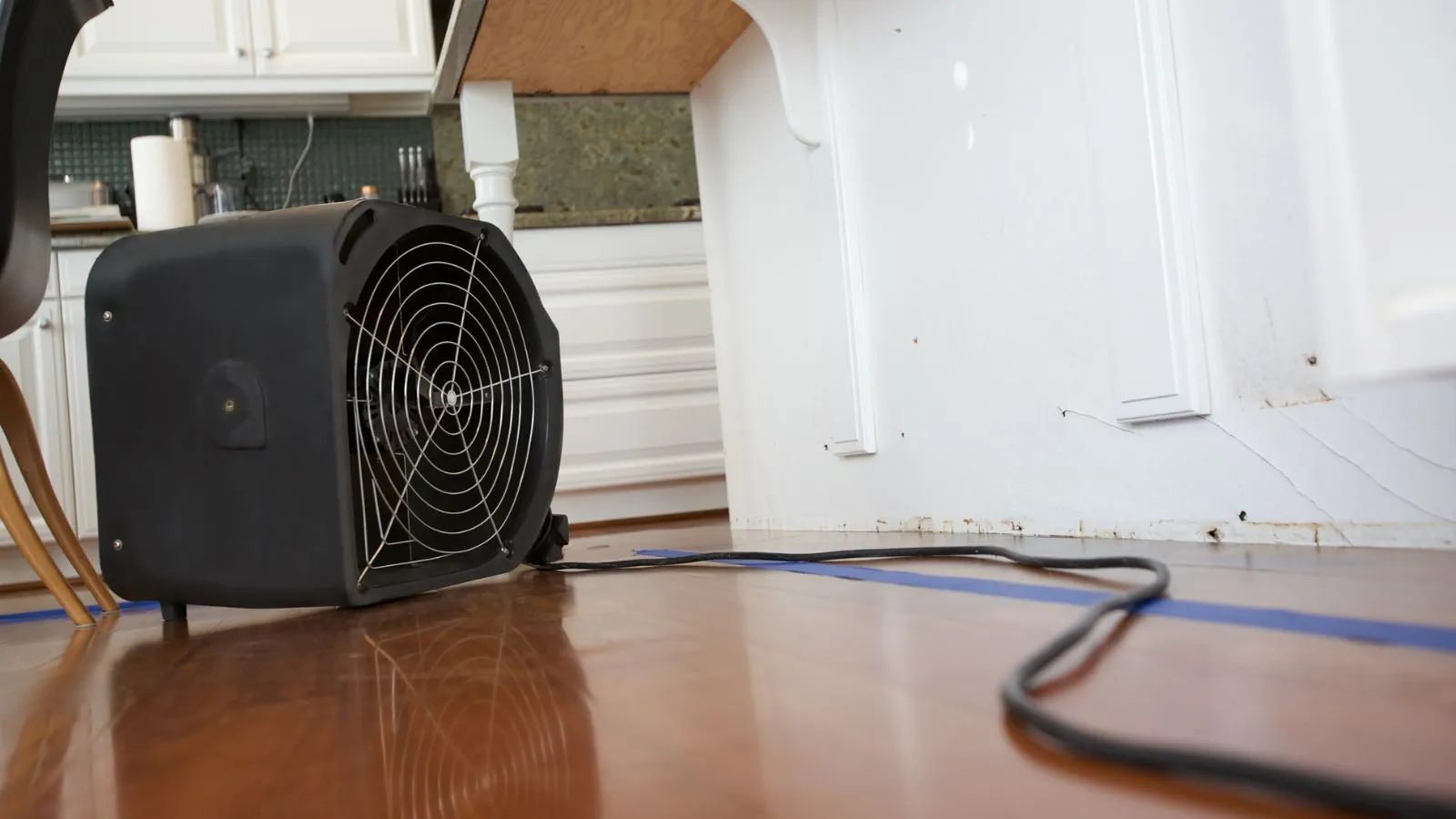
Drying is the part of an estimate that is easiest to blur and most important to pin down. A real scope names the tools: air movers, LGR or desiccant dehumidifiers, and sometimes HEPA air scrubbers or drying mats. It says how many days they are expected to run and when moisture meter readings will be taken.
Daily readings are the proof. They show the wet materials moving toward normal, and they are what an adjuster or a later buyer can review. If an estimate says drying will be done but never says how it will be verified, ask how.
Standing water comes first on the page
Before drying, water has to come out. A good estimate shows water extraction as its own line, with the method (truck-mounted or portable units, or a wet vacuum for small areas) and the areas it covers. That also tells you whether the crew treats the job as a pump-out or a full drying project.
Rebuild work usually belongs on a separate phase. If the estimate covers replacing drywall, ask whether it is listed as part of wall and drywall repair, with its own measurements, so you can compare it fairly with a rebuild quote from someone else.
Want to talk it through with someone? The dispatch line is open around the clock.
☎ (516) 845-9582How it lines up with the insurer's estimate
If you file a claim, the insurer will likely send an adjuster to examine the damage. The New York State Department of Financial Services says you may get an estimate from your own contractor to compare with the insurance company's estimate. Check your policy and ask your insurer how it handles that comparison.
If the two documents disagree, the department suggests asking for a sit-down with the contractor and adjuster to go over the estimate line by line, and getting a second opinion from an independent contractor if you still disagree. It also says permanent repairs should wait until the insurer has inspected, while emergency repairs that prevent further damage are different. Photograph the loss before cleanup and save receipts.
Red flags worth pausing over
A few patterns are worth slowing down for. None proves bad faith alone, but several together are a reason to ask more questions or get another written estimate.
- No written estimate, or one that arrives only after you sign.
- Pressure to sign today without time to compare.
- A scope that mentions demolition but not what will be measured or removed.
- No drying equipment or day counts, and no plan for moisture readings.
- A promise to bill your insurer, or to say your claim will be approved. Nobody can promise either.
- Mold testing and mold removal offered by the same company. New York law keeps those roles separate.
Questions that fit on a card
Take these into any conversation. What is the water category, and how do you know? How many pieces of equipment, running for how many days? What is excluded? How will I be told about added work, and in what form? Who documents the readings, and will I receive them?
We dispatch licensed and insured restoration professionals to homes and businesses in the 11553, 11555 and 11556 ZIP codes, and our written scope explains the work and price before work starts. We do not repair the failed pipe or appliance itself, and a licensed plumber or electrician handles those.
For more on how we cover the area, see our Uniondale service area.
Uniondale homeowners: three documents to line up
The New York State Department of Financial Services consumer guidance describes three documents that matter after a loss: your own photos and inventory, the insurer's estimate and your contractor's estimate. For a Uniondale household, the useful step is to put the three side by side before any permanent repair begins.
Differences between them are normal and are exactly what a line-by-line review is for. Keep every receipt and written note, and keep the damaged property until a settlement is reached.
Frequently Asked Questions
Why do two estimates for the same room look so different?
Usually because one lists more detail. A longer estimate may name the equipment and days, measure the demolition and list exclusions, while a short one leaves those blank. Different drying plans or an unspoken assumption about water category can also change the scope.
Should the estimate include rebuild work?
It can, but many scopes split emergency drying from rebuild. Splitting is fine if the paperwork says so clearly. Ask whether the rebuild is included, quoted separately, or left for later, so you do not assume it is covered.
What is a change order?
A change order is a written note that describes added or changed work, what it will cost and how it affects the schedule, signed before the work is done. It keeps surprises off the final bill. Ask how a contractor handles it before you start.
Does my insurer have to accept my contractor's estimate?
No, and nobody can promise it will. The New York State Department of Financial Services says you may get your own estimate to compare with the insurer's. Check your policy, ask your insurer how it reviews outside estimates, and keep your documentation.
Where do I start if I have more than one estimate in Uniondale?
Lay them side by side and check them against the table above, room by room. Mark any room, equipment count, exclusion or document that one has and the other lacks. Then call each contractor with those specific gaps rather than asking which is the best price.