
What Mitchel Field is today
Mitchel Field was an airfield on the Hempstead Plains, named in 1918 for former New York City Mayor John Purroy Mitchel. The base closed on June 25, 1961 and the property went to Nassau County for redevelopment. In 2018 the surviving buildings were added to the National Register of Historic Places as a historic district.
The former field now holds Nassau Community College, the Cradle of Aviation Museum, the Mitchel Athletic Complex and the Nassau Veterans Memorial Coliseum. Part of Hofstra University and several office buildings sit nearby. This page is mostly about commercial and institutional buildings, not single-family homes.
Where this area meets Uniondale
The Coliseum carries a Uniondale address, and the Uniondale hamlet counts Nassau Community College and the Roosevelt Field area within its census boundary. Some buildings in this part of Nassau County use Garden City mailing addresses instead, so the ZIP code on a bill may not match the hamlet. We list 11553, 11555 and 11556 as covered and 11530 as nearby.
If your building uses a Garden City address, say so on the call. The dispatcher will ask about availability that day. The area is also near the Hempstead Turnpike corridor, which splits north and south Uniondale.
Large roofs, big floors and event spaces
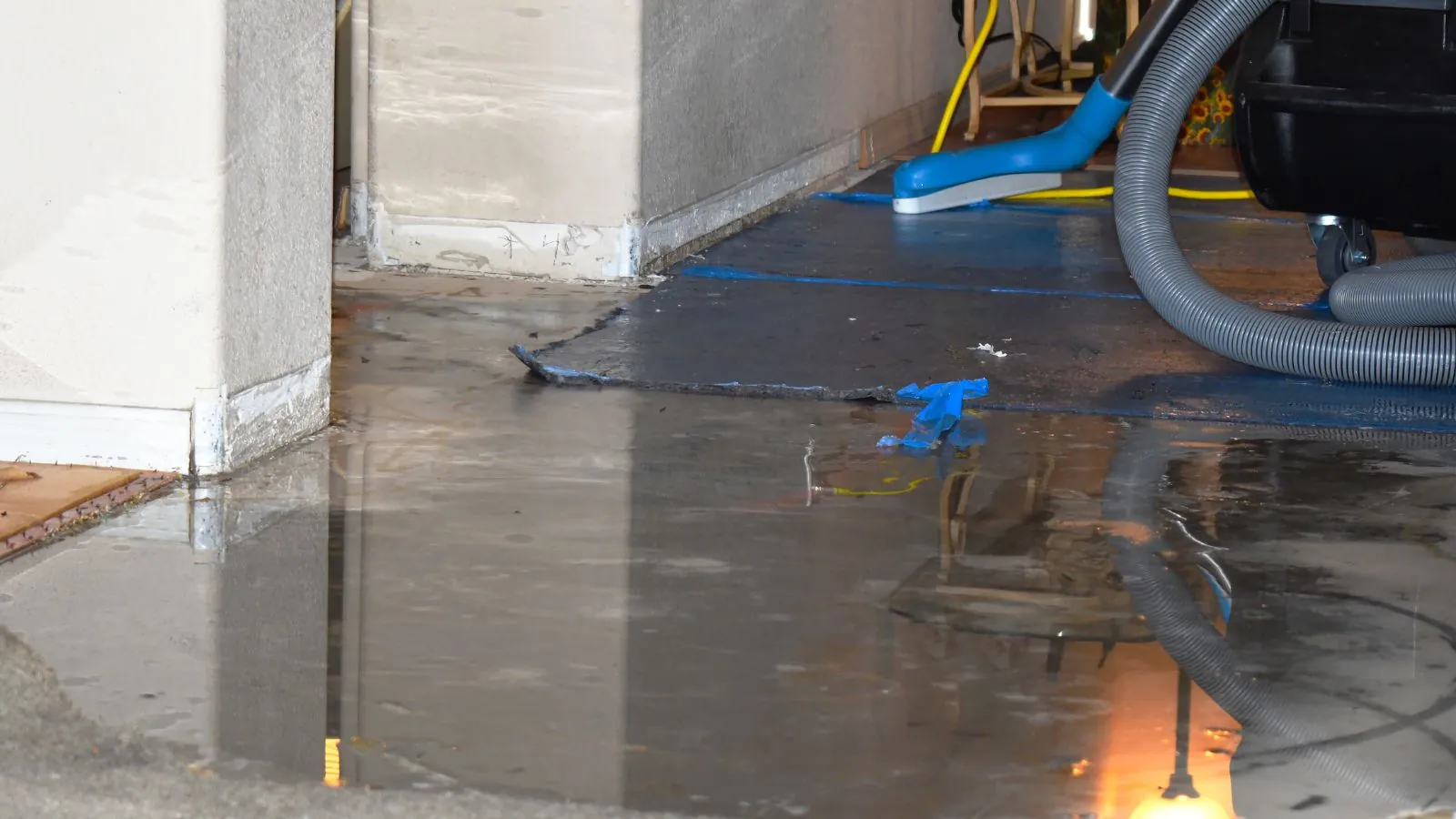
A leak above an arena concourse, a gym floor or a campus hallway covers a large area before anyone notices. Big floor plates mean more extraction, more equipment and more rooms to document. The published ANSI/IICRC S500 standard sorts water into clean, gray and black categories, and that category decides what can be dried in place. Tell the dispatcher the square area that looks wet, the floor level and whether the flooring is carpet, wood, tile or a sports surface.
Event buildings also have schedules that cannot slip easily. The crew can plan the work in sections so part of a building stays usable where that is safe. Our commercial water damage restoration page explains how phased work and after-hours access are arranged.
Historic and older buildings
Many surviving structures here date from the airfield era. Older buildings can contain materials such as old flooring, plaster or insulation that need care when wet. Do not scrape, sand or pull apart suspect materials yourself. The building owner decides whether testing is needed before demolition, and a qualified professional handles anything hazardous.
We have no record of specific materials in any building here, so this is a precaution, not a finding. If a wall or ceiling is wet, a moisture reading tells the crew how far the water went. The wall and drywall water damage repair page covers what happens to wet wall systems.
Flood and storm status not verified
We have not verified the FEMA flood-zone status for this area. The FEMA Flood Map Service Center can check an exact address, and a mapped zone does not predict a loss. We also found no source documenting a flood at Mitchel Field, so this page does not describe the area as flood-prone.
Heavy rain can still overwhelm a roof drain or a loading dock in any large building. See storm water damage cleanup for what that kind of loss involves, and flood damage restoration if water enters from outside.
Water is spreading right now? The dispatch line is open around the clock.
☎ (516) 845-9582What to do before the crew arrives
- Keep people and pets out of standing water if outlets, cords or appliances are nearby.
- Shut off the water supply only if the valve is dry, reachable and safe to turn.
- Do not touch breakers while standing in water. If the panel is hard to reach safely, tell the dispatcher.
- Photograph or film the damage before moving anything, if it is safe to do so.
- Move belongings that are still dry out of the path of the water where that is safe.
- Do not use household fans or an ordinary vacuum on sewage or contaminated water.
Insurance and responsibility
Most buildings here belong to a county, a college, a museum or a commercial owner, and each has its own insurance and facilities team. Report the loss to that team first, because they decide who calls and who files. Photograph the damage when it is safe, keep damaged items and records, and write down what you saw and when.
The New York State Department of Financial Services advises documenting a loss before cleanup. Coverage depends on the cause and on the policy, and a typical property policy does not cover flood on its own. Photos and moisture readings support the record, but they do not promise a claim will be approved.
Other Uniondale areas
For residence halls and rentals across the Turnpike, see the Hofstra University area page. For the shops and apartments on Uniondale Avenue and Front Street, see Downtown Uniondale. The service area page lists all covered ZIP codes.
Frequently Asked Questions
Is Mitchel Field a residential neighborhood?
Not mainly. Mitchel Field is a historic name for the former airfield, and today it holds institutions, museums, an arena and offices. This page is for commercial and institutional buildings in that area.
My building has a Garden City address. Can I still call?
Yes. A Garden City mailing address is common near the former field. We list 11530 as a nearby ZIP code, so the dispatcher will ask about availability that day.
Can part of an event building stay open during cleanup?
Sometimes. The crew can section off the wet area and dry it while other areas stay in use, where that is safe. The building owner and facilities team decide what can stay open.
Should I remove wet material in an older building myself?
No. If a material is old or unknown, leave it alone and tell the dispatcher and the owner. Removing it without knowing what it is can spread hazardous dust.
Does insurance cover water damage at a campus or venue?
That depends on the cause, the policy and who owns the building. The facilities or risk office usually handles the claim. We document the loss, and the insurer decides coverage.