
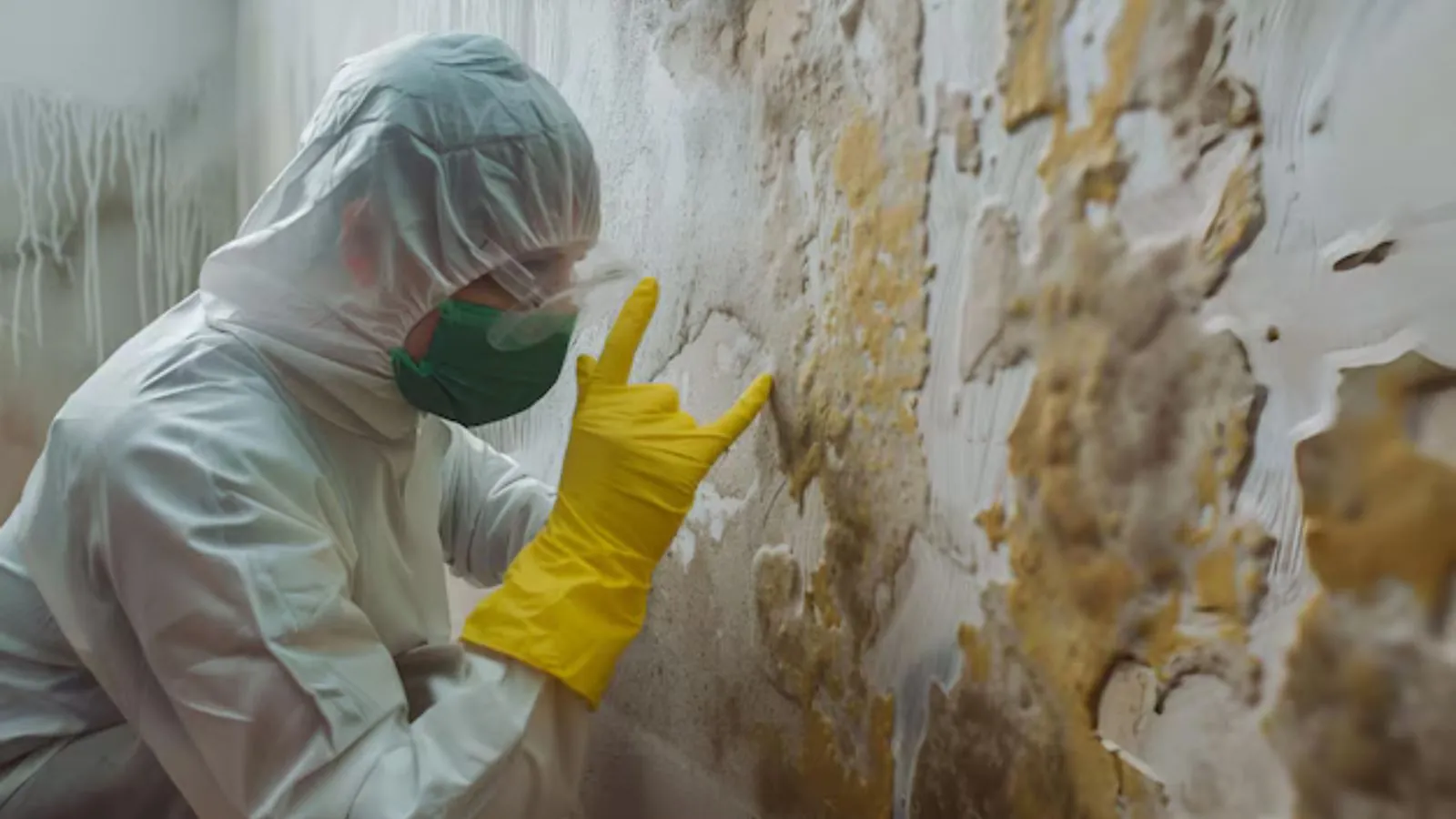
New York treats mold work as a licensed trade
The New York State Department of Labor enforces Labor Law Article 32, which sets licensing requirements and minimum work standards for mold assessment and remediation. A company that advertises or holds itself out as a mold assessor or remediator needs the matching license. That rule gives you something concrete to check before you sign anything.
The rules apply to a mold project, which the Department of Labor describes as work on more than 10 square feet of mold. Smaller household jobs and owners working on their own property have limited exceptions.
Start with the license, not the quote
The Department of Labor offers a Licensed Mold Contractors Search Tool on its website. Ask each company for the name on its license, then look it up yourself. A license shown on a flyer or a truck is not proof until you have checked it.
Check that the license type matches the job. An assessor license and a remediation license are different, and each person or company should hold the one that fits the work they propose to do.
The assessor and the remediator must be different companies
Under the state rules, a licensee may not do both mold assessment and mold remediation on the same project. A remediator also cannot work without an assessment and remediation plan from a separate licensed assessor. The split exists so the person who judges the problem does not profit from the cleanup.
If one company offers to inspect, write the plan, and do the work, that is a red flag. Ask them to explain how they comply with the separation rule, and be ready to hire two companies.
How the sequence works
The Department of Labor's consumer fact sheet lays out the order. Each step has an owner.
- A licensed assessor inspects, uses a moisture meter where needed, and looks for the moisture source.
- The assessor writes the remediation plan, which covers the moisture fix, cleanup methods, containment if needed, cost and time estimates, and clearance criteria.
- You review and agree to the plan before cleanup starts.
- A separate licensed remediator prepares its own work plan and gives it to you before any work begins.
- After the work, the assessor issues a clearance report. Containment stays in place until you receive a passed report.
| Document | Who writes it | What it should cover |
|---|---|---|
| Assessment and remediation plan | Licensed mold assessor | Moisture source, cleanup methods, containment, cost and time estimate, clearance criteria |
| Work plan | Licensed remediator | Cleanup procedures that meet the assessor's plan, delivered before work starts |
| Clearance report | Licensed mold assessor | Whether the plan was followed and the area passed |
Want to talk it through with someone? The dispatch line is open around the clock.
☎ (516) 845-9582Red flags when you compare companies
Most bad hires start with pressure or a shortcut. Watch for these signs.
- One company offers both the assessment and the remediation on your job
- A price quoted over the phone before any assessment
- No license you can look up, or a license that does not match the work
- No written plan or work plan, only a verbal description
- Urgency that pushes you to sign today
- Vague wording about containment or how the moisture source will be fixed
The Department of Labor's guidance says cost estimates for mold remediation should not be given in the absence of a mold assessment. A quote that arrives before any assessment skips the step the law builds the estimate on.
Questions to ask on the first call
Whoever you call, a short list of questions sorts careful companies from careless ones quickly. Write the answers down so you can compare them later.
A licensed company should answer these without hesitation. If the answers are vague, or if the person changes the subject to price, move on.
- What is your license type, and what name is it under?
- Will you work from a separate licensed assessor's written plan?
- Will I receive your work plan before any work begins?
- How do you set up containment, and when does it come down?
- Who is responsible for finding and fixing the moisture source?
- What happens if the clearance report does not pass?
Where water and restoration crews fit
Mold needs moisture, so the source must be found and dried no matter who removes the growth. A crew handling structural drying and dehumidification dries the building and records moisture readings, which the assessor can use. Our role on mold jobs is the water side, plus containment and remediation work where a licensed assessor's plan calls for it.
We do not advertise mold testing or assessment. For the sequence in New York, see our page on mold remediation, and remember that an assessor comes first and a separate remediator second.
Hiring for mold work in Uniondale, NY
The New York State Department of Labor licensing rules are statewide, so they apply the same way in Uniondale as anywhere else. A company based in Hempstead, Garden City, or Westbury can be a fine choice if its license checks out. The license, not the mailing address, is what counts.
Uniondale is an unincorporated hamlet in the Town of Hempstead, so permit questions for the rebuild go to the Town of Hempstead Building Department. Our dispatch area is listed on the service area page.
Frequently Asked Questions
Can the same company test for mold and clean it up?
Not on the same project in New York. The Department of Labor says no licensee may do both mold assessment and mold remediation on one project. Expect to hire a licensed assessor first and a different licensed remediator second.
Do I need a licensed company if I clean it myself?
Residential owners working on their own property are exempt from the license requirement. The household guidance says small areas, about 10 square feet or less, may be handled by the homeowner if no one has a mold sensitivity. Larger areas call for professionals.
What should a remediation plan include?
According to the Department of Labor, the plan covers the moisture fix, cleanup methods, containment if needed, cost and time estimates, and clearance criteria. If a plan skips the moisture source or the clearance step, ask the assessor why.
Who decides the job is finished?
The assessor does, through a clearance report. The state fact sheet says containment stays in place until you receive a passed report. If the area does not pass, the assessor lists the remaining steps.
Where do I ask about permits for rebuilding in Uniondale?
Uniondale is unincorporated, so ask the Town of Hempstead Building Department. After mold removal, rebuilding may involve electrical or plumbing work, and a licensed electrician or plumber pulls those permits where required.